The Geometry of the Silent Waste: NASA’s Micro-Beacon and the Privatization of Lunar Navigation
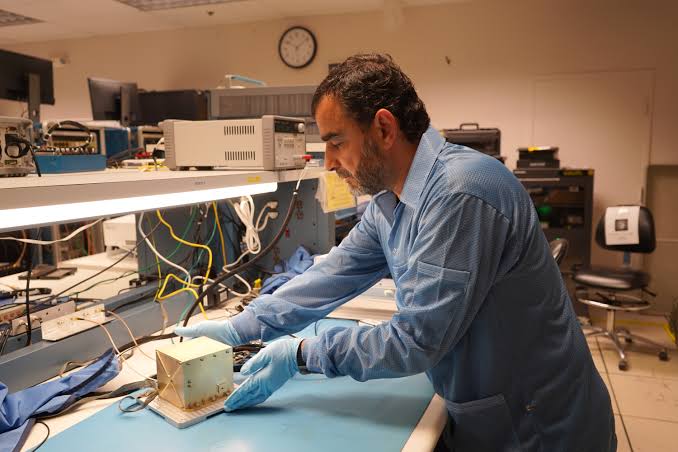
On July 13, in a handover that possessed the quiet gravity of a diplomatic exchange rather than the theatrical fanfare of the mid-century Space Race, NASA delivered a parcel no larger than a split loaf of bread to the Houston headquarters of Intuitive Machines. This unassuming payload—the NavCube3-mini—is a marvel of dense, clinical engineering. Weighing a mere 3.5 pounds and occupying roughly half the volume of a standard shoebox, this miniature navigation system is destined for integration into Altus-1, the private aerospace firm’s maiden lunar relay satellite. Yet, despite its diminutive physical footprint, the device represents the intellectual scaffolding for a profound geopolitical and commercial migration: the construction of a permanent, functioning municipal infrastructure on the surface of the Moon.
A Cartography of the Shadowed South
To understand the necessity of the NavCube3-mini is to understand the hostile geography of our celestial neighbor. The modern lunar gold rush is concentrated on the Moon’s south pole—a wilderness of eternal shadow, ancient ice, and treacherous topography where direct-to-Earth communication is frequently severed by the bulk of the lunar mass itself. When NASA’s Artemis astronauts and their robotic vanguard eventually descend into these deep, freezing craters, they will require more than mere fortitude; they will require a dial tone and a compass. By anchoring the Altus-1 relay satellite, the NavCube3-mini acts as an orbital lighthouse, processing weak GPS signals from Earth and translating them into precise, real-time positioning and high-bandwidth telemetry for those operating on the lunar regolith below. It is, in essence, the genesis of a off-world GPS network.
> "To conquer the frontier, one must first map it; to inhabit it, one must keep it connected."
The Bureaucrat and the Builder
This technological hand-off highlights a broader, elegant shift in the architecture of modern space exploration: the transition from monolithic state enterprise to a symbiotic public-private choreography. Where NASA once manufactured every bolt and booster of its destiny, it now acts as a sophisticated venture patron, outsourcing the heavy lifting of orbital transit to agile, commercial entities like Intuitive Machines. In this new paradigm, the state provides the exquisite, highly specialized instrumentation—the fruits of decades of federally funded research—while the private sector builds the highway. By utilizing Altus-1 as a commercial relay, NASA is effectively leasing dial-tone service on a network it helped conceive, outsourcing the risk of operation while securing the vital lifelines needed for its future Moon Base.
Ultimately, the NavCube3-mini is a monument to the elegant poetry of miniaturization. In the harsh vacuum of space, where every ounce of payload is paid for in liquid propellant and millions of dollars, the reduction of a room-sized computing suite into a three-pound box is the true measure of progress. As Altus-1 prepares to slip the bonds of Earth's gravity, it carries with it not just a piece of sophisticated hardware, but the quiet assurance that when humanity next steps into the dust of another world, we will not be wandering in the dark.