The Velocity of Arrival: Inside NASA’s High-Stakes Battle with Lunar Dust
For decades, our collective memory of lunar arrival has been filtered through the grainy, silent grace of the Apollo 11 telemetry—a tranquil descent onto a pristine, untouched world. Yet, the physical reality of touching down on another celestial body is not an elegant drift; it is an act of violent displacement. As NASA prepares to return humanity to the lunar south pole under the Artemis banner, the agency is grappling with a deceptively chaotic adversary: dust. Known scientifically as Plume-Surface Interaction (PSI), the phenomenon describes the tempest of super-heated gas and razor-sharp regolith kicked up by a descending spacecraft’s engine. It is a hostile feedback loop where the very instrument of descent threatens to sandblast the vehicle itself, blind its optical sensors, and scour the local environment with a storm of high-velocity ballistic shrapnel.
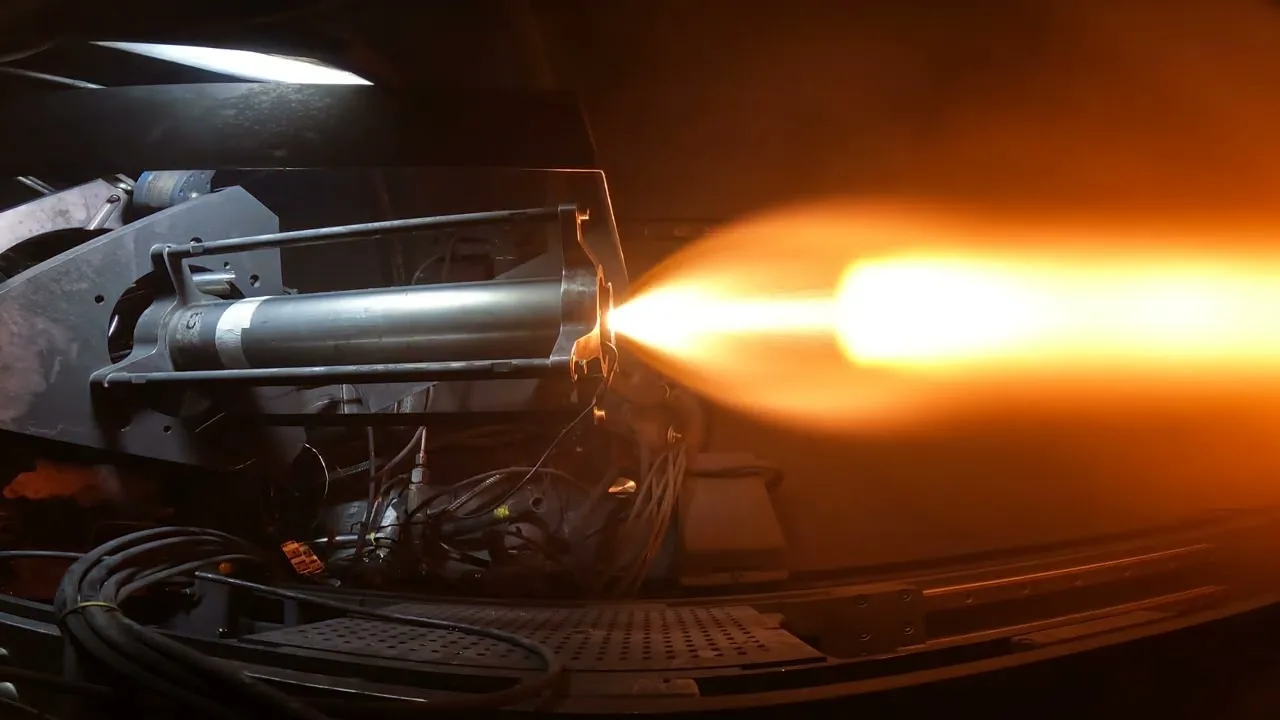
To master this volatile threshold, NASA has embarked on a sophisticated suite of PSI testing, recently entering a critical new phase of physical trials and advanced computational modeling. In specialized vacuum chambers engineered to mimic the airless vacuum of the Moon, researchers are recreating the precise mechanics of rocket exhaust meeting simulated regolith. Newly updated test runs offer a mesmerizing, terrifying glimpse of these dynamics. In the absence of an atmospheric cushion to slow them down, displaced lunar particles do not billow and billow into soft clouds as they would on Earth; instead, they shear outward at near-orbital speeds. These trials are crucial for mapping the boundaries of a hazard that grows exponentially with the mass of modern landers, which dwarf their mid-century Apollo predecessors and demand unprecedented engine thrust.
```
"Understanding plume-surface interaction is not just an engineering puzzle; it is the fundamental gatekeeper to establishing a permanent human presence on the Moon."
```
The implications of these simulations extend far beyond the sterile confines of government laboratories. In the contemporary space economy, where private entities compete to deploy behemoth landing systems, understanding the micro-mechanics of the plume is the ultimate arbiter of viability. A single miscalculation in engine throttling or landing pad design could transform a historic touchdown into a self-inflicted catastrophe of degraded hulls, ruined scientific instruments, and obscured telemetry. By demystifying the violent choreography of the plume-surface interaction, NASA and its commercial partners are writing the literal building codes for extraterrestrial civilization. The path to the stars, it seems, must be paved with the meticulous, granular mastery of the dust beneath our feet.