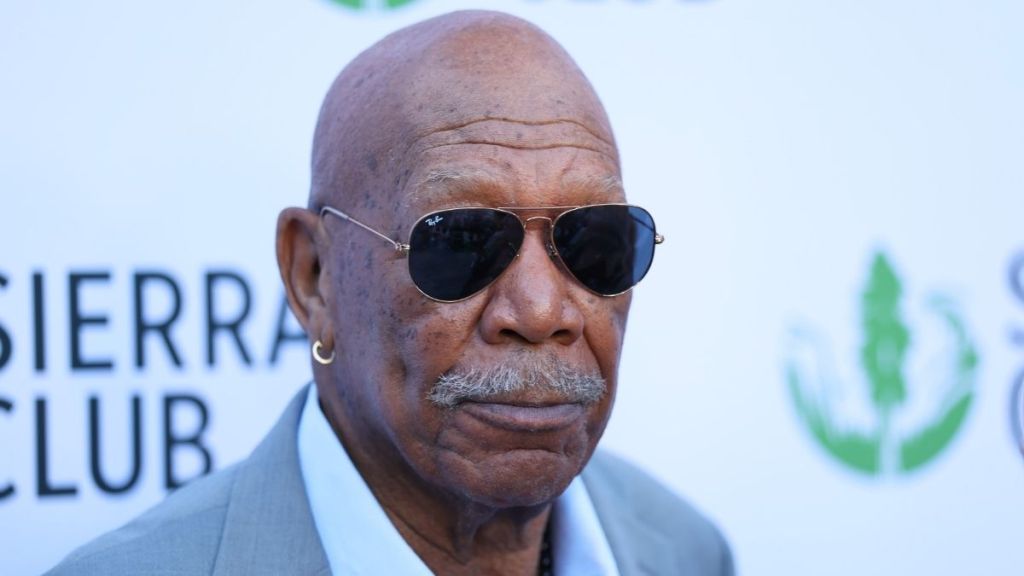
The Gravity of Whispers: Morgan Freeman on "Lioness" and the Myth of the Voice
To encounter Morgan Freeman at eighty-nine is to confront a cultural monument that stubbornly refuses to act like one. He resides in that rare, rarefied stratosphere of American cinema where an actor’s physical presence is almost secondary to the sonic architecture of his existence. For decades, his voice has been treated by audiences and critics alike not merely as a vocal instrument, but as a secular scripture—a rich, honeyed baritone capable of narrating the cosmos, comforting the damned, or playing the Almighty with a casual, devastating warmth. Yet, as he prepares to step back into the high-stakes geopolitical arena for the third season of the espionage thriller Lioness, Freeman greets the global obsession with his larynx with a dry, dismissive shrug. To him, the voice is not a divine gift or a calculated aesthetic triumph; it is simply the byproduct of a mid-century Mississippi upbringing, some early speech training, and the sheer luck of survival. He speaks of it with the unsentimental pragmatism of a master carpenter discussing a favorite chisel: it is a reliable tool that gets the job done, nothing more.
This laconic detachment serves him spectacularly well in Lioness, where Freeman plays the formidable U.S. Secretary of State, Edwin Mullins. Amid the series’ frenetic, hyper-kinetic violence and high-decibel paranoia, Freeman’s performance operates as a masterclass in stillness. Where younger actors sweat and strain under the weight of simulated global crises, Freeman merely tilts his head, lets a silence stretch a beat too long, and delivers a line with the quiet finality of a guillotine. He understands instinctively that power in the modern empire is rarely loud; it is bureaucratic, weary, and utterly self-assured. In a television landscape dominated by narrative histrionics, his presence is a stabilizing anchor, a reminder of an era when cinematic authority was earned through gravity rather than pyrotechnics.
There is a poetic irony in Freeman’s late-career dominance. Having spent his youth in the theatrical trenches before his mainstream breakthrough in mid-life, he possesses the hard-won perspective of an artist who knows that fame is a belated, often fickle guest. This late-stage prolificacy is not a desperate grasp for relevance, but the natural rhythm of a man who simply views retirement as an unnecessary pause. When pressed on the legacy of his singular cadence, he is quick to demystify the magic, redirecting the praise to the writers who gave him words worth speaking in the first place. Ultimately, Freeman remains a reassuring anomaly in a culture obsessed with youth and frantic self-reinvention—a performer who has achieved immortality simply by remaining resolutely, magnificently himself, proving that the most powerful thing an actor can do is speak softly and let the world lean in to listen.