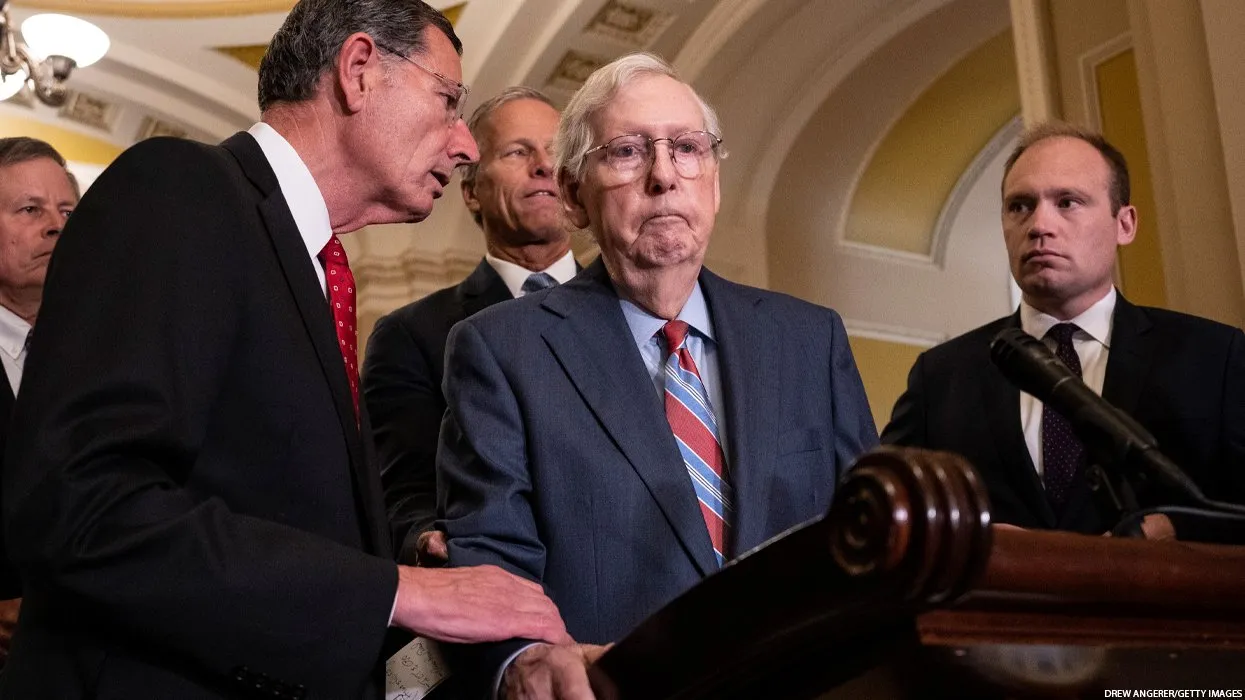
The Theater of Twilight: Mitch McConnell and the Chilling Choreography of the Senate Floor
The United States Senate has long functioned as a gilded terrarium for the preservation of political longevity, a chamber where power is measured not in youthful vigor but in the slow, glacial accumulation of institutional gravity. Yet, the choreography of this august room recently yielded a spectacle far more fragile than formidable. Ten days before his eventual hospitalization, Senator Mitch McConnell—the taciturn architect of the modern conservative judiciary and a statesman whose political survival instincts have long bordered on the supernatural—embodied a quieter, more unsettling kind of drama. Newly surfaced footage from June 4th captures a senator not merely aging, but adrift in the very room he has dominated for decades, transforming a routine roll call into a haunting vignette of cognitive dissonance.
```
"To watch McConnell struggle to decipher the basic ledger of a roll-call vote is to witness the dangerous intersection of personal pride and public duty."
```
In the recorded footage, the mechanical certainty that once defined McConnell's legislative maneuvers appeared entirely stripped away. As names were called, the Senator from Kentucky seemed temporarily unmoored from the syntax of the floor, casting incorrect votes only to be corrected by the silent, urgent choreography of the Senate Clerk. It was a dance of desperate preservation: a clerk signaling a quiet yea or nay through discreet, desperate gestures, guiding the faltering hand of a man who once held the entire legislative branch in his fist. To watch McConnell struggle to decipher the basic ledger of a roll-call vote is to witness the dangerous intersection of personal pride and public duty—a moment where the curtain of political infallibility is yanked back to reveal the stark, human frailty beneath the tailored suit.
This display on the Senate floor is not merely an isolated incident of medical vulnerability; it is a potent metaphor for a broader Washington establishment locked in a stubborn, twilight embrace with its own past. The spectacle of staffers and clerks acting as external nervous systems for their ailing principals has become an increasingly common, if quietly tolerated, reality in the nation's capital. McConnell’s public hesitation exposes the silent pact of the American gerontocracy: an unspoken agreement to look away, to rationalize the lapses, and to keep the machinery of power running at all costs. As the Kentucky senator’s physical setbacks become impossible to obscure behind the shield of partisan loyalty, the nation is forced to confront an uncomfortable truth—that the halls of power are increasingly populated by the ghosts of a passing era, desperately clinging to the levers of an empire that is rapidly moving past them.