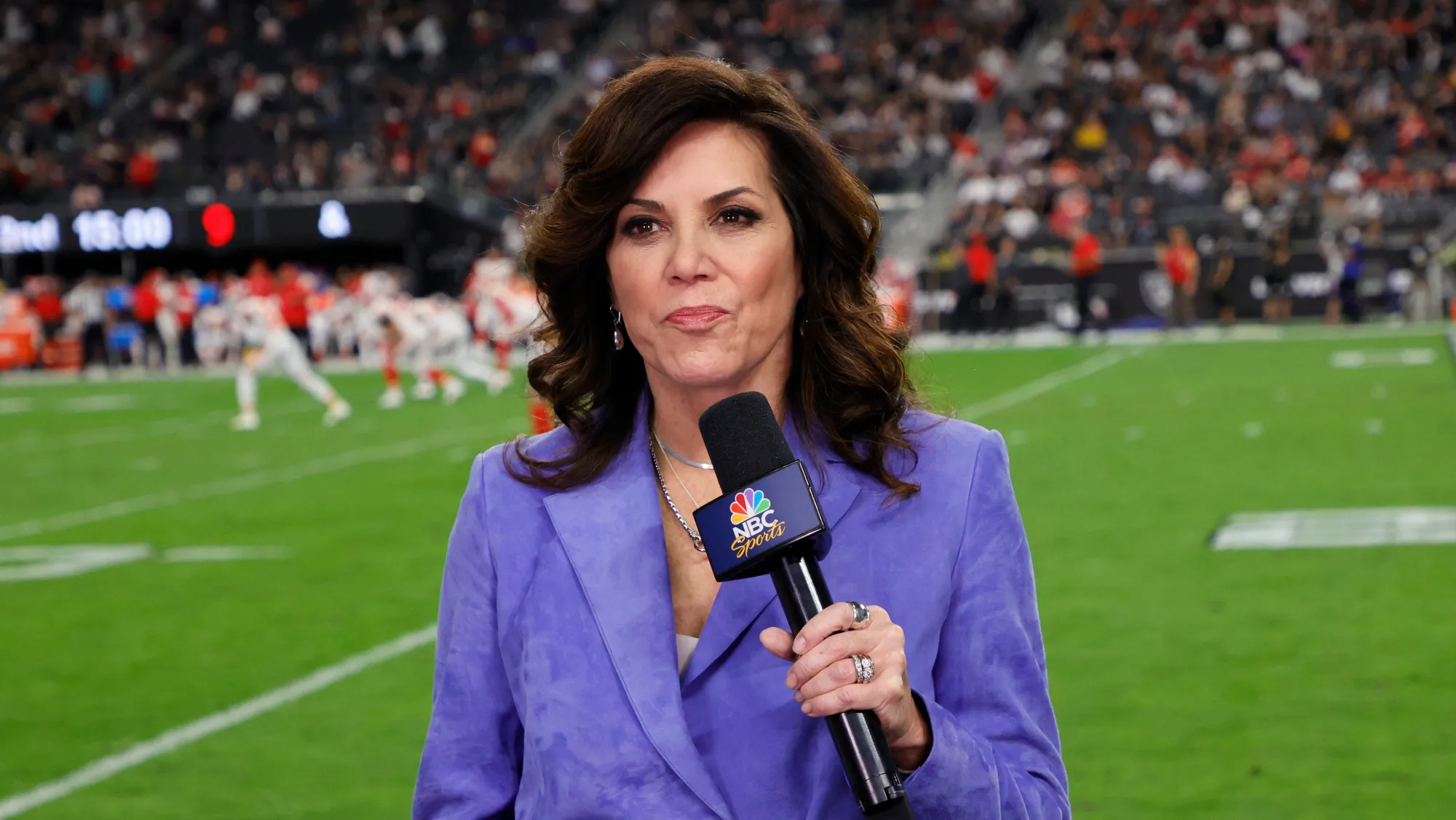
The Sideline Shifter: Michele Tafoya’s Second Act in the Culture Wars
The Art of the Invisible Reporter
For over a decade, Michele Tafoya was the high priestess of the inconsequential. Standing on the frozen turf of Lambeau Field or the pristine sidelines of Arlington, she was the epitome of prime-time broadcast restraint—a human teleprompter of hamstring updates and harmless gridiron platitudes. Beside the slick, operatic play-by-play of Al Michaels and the dry, analytical rasp of Cris Collinsworth on NBC’s Sunday Night Football, Tafoya’s role required a deliberate, almost radical self-effacement. She was a master of the polite nod and the studied refusal to let her own persona, much less her politics, intrude upon the sacred, bipartisan spectacle of American football. To watch her then was to watch someone committed to the margins, a professional cipher who seemed to view the pursuit of national celebrity with a quiet, old-school skepticism.
```
"She has successfully translated decades of television equity—the familiar, soothing presence in millions of living rooms—into a potent weapon of political grievance."
```
The Republican Primary Coup
That quietude, it turns out, was merely the prologue to a loud and lucrative second act. Today, the 61-year-old Tafoya has shed the parka of the neutral observer to don the armor of the modern culture warrior, capturing the Republican nomination for the U.S. Senate in Minnesota. Her primary victory was not merely a win; it was a demolition of the state’s established political archetypes. She decisively beat back eight challengers, most notably Adam Schwarze, a highly decorated, party-endorsed ex-Navy SEAL, and Royce White, the former NBA first-round pick turned anti-leftist iconoclast. By outmaneuvering both the traditional military-patriot brand and the louder, online-adjacent populist wing, Tafoya proved that her years in the middle of the road were the perfect camouflage for an impending ideological pivot.
From Sunday Night to the Senate Stump
This metamorphosis is a masterclass in the weaponization of the "sensible moderate" archetype. Minnesota, a state whose metropolitan progressive veneer often masks a deeply fractured and culturally conservative interior, now faces a general election where Tafoya’s brand of seasoned, maternal conservatism could pose a genuine threat to the Democratic establishment. By positioning herself as an exile from a mainstream media apparatus she claims has lost its mind, she appeals directly to suburban voters who remember her as the comforting voice of their weekend wind-downs. She is no longer asking coaches about halftime adjustments; she is questioning the integrity of public institutions and progressive social policy. In doing so, she has demonstrated a chillingly modern truth: in the current political landscape, the most effective firebrands are those who spent years pretending they had no spark at all.