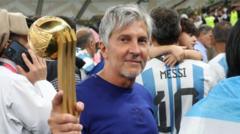
The Architect of the Dynasty: Jorge Messi, Father and Sentinel, Dies at 68
In the gilded theater of modern football, where Lionel Messi moved with the elusive grace of a deity, his father, Jorge, was the gravity that anchored him to the earth. The announcement of Jorge’s death at the age of 68, following a prolonged illness, marks the quiet closing of an extraordinary, behind-the-scenes epoch. If the younger Messi was the miracle, the elder was the pragmatist who engineered its delivery. To understand the trajectory of the world’s greatest footballer is to understand the fierce, protective custody of his father—a former steelworker from the industrial grit of Rosario who transformed himself into one of the most formidable, if reluctant, power brokers in global sport.
Their journey from the Argentine pampas to the glittering boardrooms of Catalonia is the stuff of modern sporting mythology. It was Jorge who fiercely championed his son’s talent when local clubs balked at the cost of Lionel's growth hormone treatments; it was Jorge who secured the legendary, improvised contract signed on a paper napkin at a Barcelona tennis club. In a sport increasingly dominated by slick corporate agencies and predatory intermediaries, Jorge remained an old-world sentinel. He was the buffer against a ravenous media, the lightning rod for tax controversies, and the architect of a financial empire. His negotiation style was famously unadorned, driven not by the textbook maneuvers of sports management, but by the relentless, singular instinct of a patriarch defending his bloodline.
> "He understood, perhaps better than anyone, that to protect Lionel the player, he had to fiercely guard Lionel the son."
As condolences pour in from the highest echelons of FIFA to the narrow streets of Rosario, the silence left in Lionel's camp is of a heavier, more profound order. Behind the seven Ballon d’Or trophies and the crowning glory of the World Cup triumph in Qatar lay the invisible architecture of paternal devotion. Jorge’s passing leaves a void in a narrative that has always been a quiet duologue between the boy who could do anything with a ball and the father who ensured the world would let him do it. The legacy left behind is not merely measured in silverware or contracts, but in the realization of an impossible dream, carried on the shoulders of a father until the son was strong enough to carry the world.