The Analog Firewall: Inside Mark Zuckerberg’s Irish Retreat
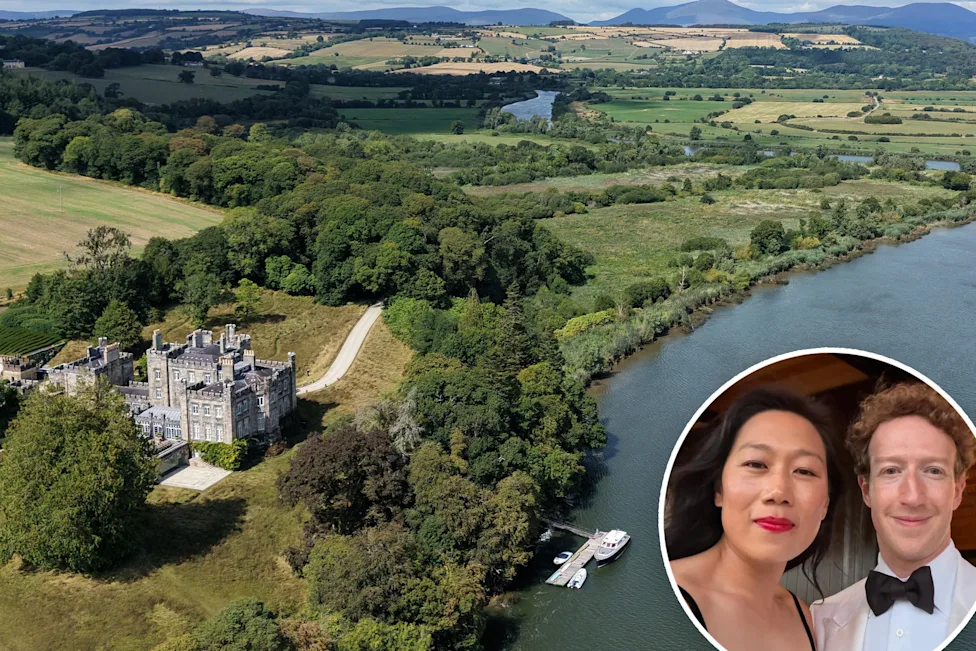
For an executive who has spent the better part of two decades coaxing humanity to migrate into the weightless, pixelated ether of the virtual world, Mark Zuckerberg’s latest acquisition is a remarkably heavy anchor. The Meta patriarch has reportedly added a nearly 200-year-old estate in the Irish countryside to his sprawling global real estate portfolio, trading the sterile, glass-and-steel minimalism of Silicon Valley for the damp, moss-hung gravity of nineteenth-century stone. This is not merely a transaction of surplus wealth; it is a profound manifestation of the modern tech baron’s evolution. No longer content with colonizing a speculative future, today’s digital sovereigns are increasingly compelled to purchase the past—curating fortresses that offer the one luxury code cannot synthesize: the prestige of historical permanence.
The estate itself, a grand testament to Anglo-Irish ascendancy architecture, stands in direct, almost comical defiance of the tech sector's obsession with optimization. Archival documents reveal that the manor’s layout is so labyrinthine and vast that it requires “a brisk walk of four and a half minutes to reach the dining room from the kitchen.” For a billionaire who built an empire by eradicating "friction" from human interaction—streamlining our attention, our friendships, and our transactions into instantaneous loops—this architectural inefficiency is a delicious irony. In Zuckerberg’s new domain, the passage of time is measured not in microseconds of latency, but in the echoing footsteps of staff traversing cold limestone corridors. It is an environment designed specifically to resist the hurried rhythms of the algorithmic age.
> "In Zuckerberg’s new domain, the passage of time is measured not in microseconds of latency, but in the echoing footsteps of staff traversing cold limestone corridors."
This foray into the Irish mists fits neatly into a broader, increasingly insular migration pattern among the global technocracy. From fortified agricultural compounds in Hawaii to subterranean bunkers in the South Pacific, the architects of our hyper-connected, highly volatile digital public square are quietly insulating themselves in physical strongholds. There is a neo-feudal poetry to this retreat. Having spent their careers disrupting the physical structures of twentieth-century civic life, these billionaires are rebuilding them as private, heavily secured fiefdoms. Zuckerberg’s Irish castle represents the ultimate analog firewall: a sanctuary of thick granite walls, deep-set moats of capital, and rolling green acreage where the ultimate status symbol is not connectivity, but the exquisite, unhackable quiet of isolation.