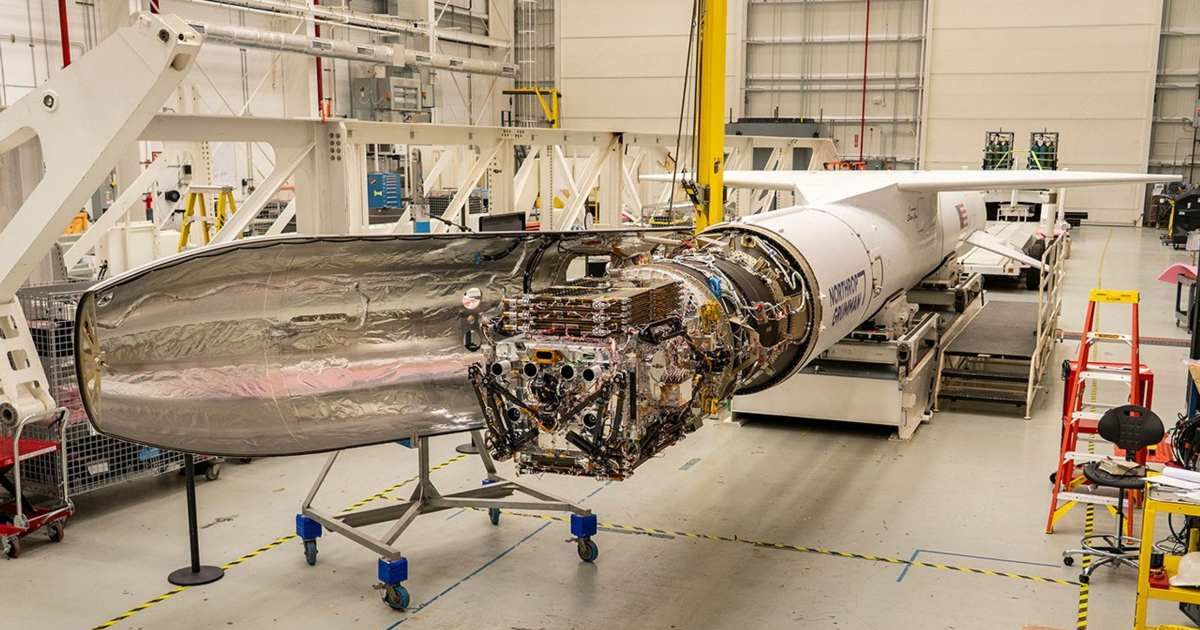
Pioneering LINK Spacecraft Prepared for Mission to Elevate NASA’s Neil Gehrels Swift Observatory
A historic, first-of-its-kind robotic servicing mission is poised to extend the operational lifespan of one of NASA’s most productive space telescopes. The LINK spacecraft, built by commercial aerospace firm Katalyst Space, is scheduled to launch no earlier than Thursday, July 2, at 5:09 a.m. EDT (9:09 p.m. UTC+12). The launch will take place from the remote Kwajalein Atoll, part of the Republic of the Marshall Islands in the South Pacific Ocean, marking a critical milestone in the field of in-orbit satellite servicing.
Key Mission Details
- Target: NASA’s Neil Gehrels Swift Observatory
- Servicing Spacecraft: LINK (developed by Katalyst Space)
- Launch Date/Time: No earlier than Thursday, July 2, at 5:09 a.m. EDT
- Launch Site: Kwajalein Atoll, Republic of the Marshall Islands
- Primary Objective: Raise the observatory’s decaying orbit to extend its mission life
Launched in November 2004, the Neil Gehrels Swift Observatory has spent more than two decades revolutionizing our understanding of the high-energy universe. Swift is a multi-wavelength space telescope dedicated to detecting and studying gamma-ray bursts (GRBs)—the most powerful explosions in the cosmos—as well as other transient astronomical phenomena. Over its twenty years of continuous operation, natural atmospheric drag has gradually degraded Swift's orbit. Without intervention, this orbital decay would eventually force the telescope into a destructive re-entry through Earth’s atmosphere, prematurely ending a mission that continues to yield vital scientific discoveries.
The LINK robotic vehicle represents the cutting edge of In-Space Servicing, Assembly, and Manufacturing (ISAM) technology. Once in orbit, LINK will perform a precise rendezvous and docking maneuver with the aging Swift observatory. Using its onboard propulsion systems, the servicing vehicle will execute a series of orbital maneuvers to push Swift to a higher, safer altitude. This complex operation is being closely watched by international space agencies and commercial operators alike, as it serves as a crucial proof-of-concept for orbital sustainability.
The success of the LINK mission could signal a paradigm shift in how space agencies manage legacy orbital hardware. Rather than decommissioning fully functional science instruments when they run out of fuel or drift from their optimal orbits, agencies can increasingly leverage commercial partnerships to repair, upgrade, and relocate multi-million-dollar assets. By demonstrating the feasibility of commercial life-extension services for sensitive scientific telescopes, NASA and Katalyst Space are paving the way for a more sustainable, circular economy in Earth orbit.