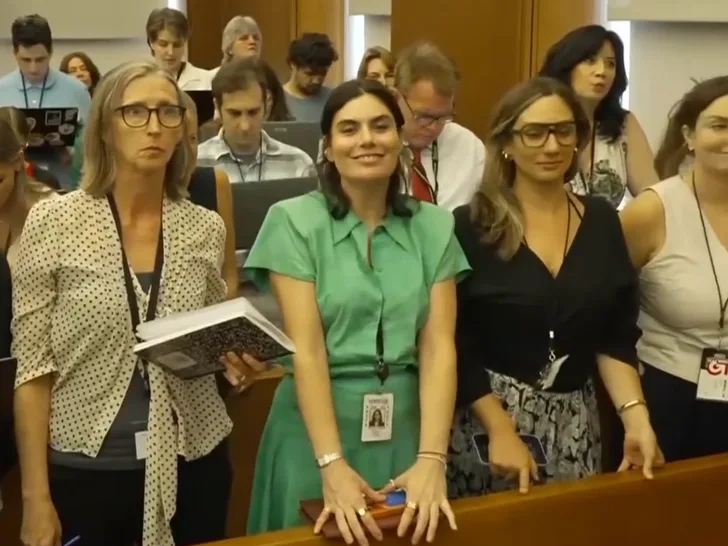
The Cost of a Wink: How a Courtroom Gesture Derailed a Prestige Feature
In the quiet, suffocating atmosphere of the Massachusetts courtroom where the unimaginable tragedy of the Lindsay Clancy trial unfolded, the sheer gravity of the proceedings demanded a reverent, almost sacred silence. It was a space defined by the heavy weight of grief, detailing a mother’s descent into severe postpartum psychosis and the resulting deaths of her three young children. Yet, in our hyper-mediated age, the boundary between solemn reportage and performative spectacle is precarious. It was within this delicate ecosystem that a prominent print journalist, tasked with chronicling the grim reality for a national audience, committed a fatal error of optics. A fleeting, highly synchronized gesture—a knowing grin paired with an unsettling wink caught on a live courtroom broadcast—shattered the room’s somber facade. Instantly, the digital coliseum erupted, transforming a chronicler of tragedy into the central antagonist of a viral storm.
The institutional fallout was as swift as it was severe, illustrating the uncompromising calculus of contemporary media prestige. The journalist, who had been commissioned to pen a definitive, high-profile essay dissecting the trial’s cultural implications for a legacy glossy publication, suddenly found her byline treated as toxic. Recognizing that the viral transgression had permanently compromised the moral authority required to examine such a profound human catastrophe, the editorial leadership quietly but decisively spiked the upcoming piece. What was intended to be a flagship narrative feature, poised to dissect the intersection of maternal despair and judicial scrutiny, was reduced to an unacceptable liability, discarded in the clinical interest of brand preservation.
> "To smile in the shadow of such profound grief is to break the unwritten contract of public mourning, exposing the voyeuristic machinery that hums beneath the polished prose."
This abrupt cancellation underscores a deeper, more insidious pathology within the modern true-crime industrial complex. In an era where reporters are encouraged to cultivate personal brands and public trials are consumed with the voracity of episodic thrillers, the line between journalistic distance and main-character syndrome has dangerously blurred. The reporter’s wink was not merely an isolated lapse in decorum; it was a Freudian slip of a media culture that occasionally forgets the human collateral at the heart of its content. When the camera inadvertently captures the arbiters of taste and empathy in a moment of misplaced levity, the illusion of objective solemnity dissolves, leaving a cynical public to wonder where the theater ends and the journalism begins.