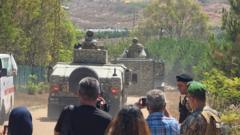
Lebanese Army Begins Deployment in Southern 'Pilot Zone' Following Israeli Pullback
The Lebanese Armed Forces (LAF) have commenced deployment into a designated "pilot zone" in southern Lebanon, marking a critical initial phase of a United States-brokered agreement aimed at ending the latest conflict between Israel and the militant group Hezbollah. According to Lebanese military sources, national troops began moving into positions recently vacated by the Israel Defense Forces (IDF) along the southern border corridor. This phased redeployment is part of a broader diplomatic framework designed to restore Lebanese state authority over areas that have seen heavy fighting over the past months.
The transitional agreement, negotiated with extensive mediation from Washington, establishes a step-by-step mechanism for Israeli withdrawal alongside the progressive deployment of thousands of Lebanese soldiers. The "pilot zone," a restricted sector in the immediate border region, serves as a testing ground for the viability of the broader ceasefire. Under the terms of the deal, the Lebanese army, supported by the United Nations Interim Force in Lebanon (UNIFIL), is designated as the sole armed presence in the region south of the Litani River. A Lebanese military spokesperson emphasized the gravity of the mission, stating, "Our deployment is intended to reassure our citizens, stabilize the borderlands, and assert national sovereignty under the sole authority of the state."
This security arrangement draws heavily on United Nations Security Council Resolution 1701, which concluded the 2006 war between Israel and Hezbollah but was never fully implemented. Israel has long demanded the complete removal of Hezbollah's infrastructure and personnel from the border area to secure its northern communities, while Lebanon has sought guarantees against airspace violations and territorial incursions. Regional analysts remain cautious, noting that the success of this pilot phase hinges on the disarmament of non-state actors in the zone and the robust enforcement capabilities of the Lebanese army, which currently faces severe resource constraints amidst Lebanon's ongoing economic crisis.
Key Aspects of the US-Brokered Agreement:
- Phased Withdrawal: Israeli forces will gradually pull back from occupied southern Lebanese territory as Lebanese state troops advance.
- The 'Pilot Zone': A localized testing area along the border to monitor compliance and establish security protocols before a wider rollout.
- UNIFIL Support: International peacekeepers will maintain their monitoring mandate, coordinating closely with the Lebanese army.
- Sovereignty Reassertion: The deployment aims to ensure that no unauthorized weapons or paramilitary groups operate in the southern border sector.
International observers have welcomed the development as a fragile but necessary pathway toward a permanent cessation of hostilities. While US officials have expressed cautious optimism that the pilot deployment will pave the way for a full Israeli exit and a lasting security architecture, Israeli defense officials warned that they retain the right to act if the terms of the agreement are breached. As Lebanese military convoys establish checkpoints and observation posts in the pilot zone, the coming weeks will test whether this diplomatic compromise can transition into a sustainable, long-term peace.