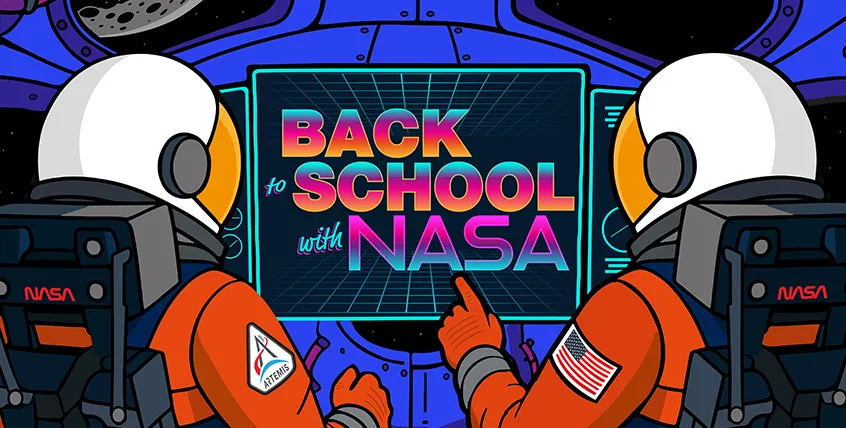
The Autumn of Cosmic Ambition: How NASA is Recalibrating the Classroom for a New Space Age
As the crisp, restorative air of September settles in, bringing with it the familiar secular liturgy of the back-to-school season—the scent of fresh paper, the geometry of empty notebooks—there is a quiet revolution occurring at the intersection of pedagogy and the cosmos. No longer confined to the static diagrams of outdated textbooks, the classroom is being invited to participate in a living, breathing epoch of stellar discovery. NASA’s latest educational initiative, timed to coincide with the academic restart, is less a traditional curriculum roll-out and more of an open-ended invitation to join what historians are already calling the second golden age of space exploration. It is a calculated, elegant effort to bridge the gap between the mundane discipline of student life and the sublime, terrifying beauty of the universe.
Demystifying the Infinite
For decades, the relationship between the public and the space program was largely spectator-driven: we watched, breathless, as tin cans carrying heroic figures broke the atmosphere, or we gaped at grainy transmissions from the lunar surface. Today, the Artemis era demands a different kind of engagement—one that is decentralized, participatory, and profoundly democratic. Through a sophisticated suite of digital tools, design challenges, and citizen-science initiatives, NASA is dismantling the ivory tower of astrophysics. By offering students direct access to real-world data streams, orbital mechanics simulations, and engineering protocols, the agency is transforming STEM from an abstract academic acronym into an active, tactile pursuit.
> "The goal is no longer just to inspire wonder, but to weaponize curiosity into tangible capability."
The Citizen Scientist in the Bedroom
The genius of this modern educational push lies in its scale. A teenager in a rural district, equipped with nothing more than a modest laptop and a persistent curiosity, can now analyze light curves from distant exoplanets or help optimize code for robotic rovers destined for Martian soil. These are not merely patronizing simulations; they are genuine entry points into an industry desperately in need of fresh minds as humanity prepares to establish permanent habitats on the Moon and venture onward to Mars. In an age often characterized by digital malaise and existential anxiety, these programs offer a rare currency: agency. They suggest to a young generation that the future is not merely something to be inherited, but something to be actively designed, coded, and launched.
As the school year gains momentum, the invitation stands as a reminder that the boundary between the classroom and the cosmos has never been more porous. To look upward is no longer an act of passive dreaming, but a viable career trajectory. In aligning the rhythms of the academic calendar with the grand choreography of space exploration, NASA is betting on a simple, profound truth: that the next great leap for mankind will begin not on a launchpad in Florida, but at a cluttered desk on a Tuesday afternoon.