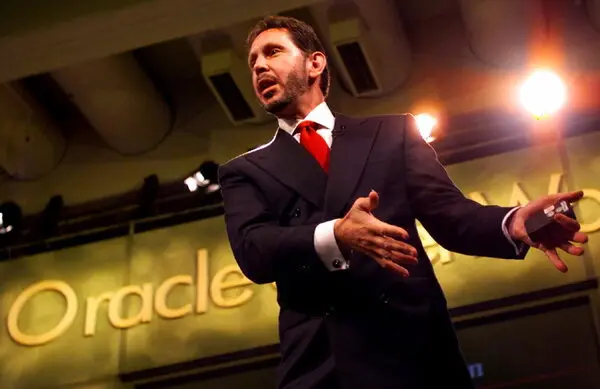
The Last Evangelist of Silicon Valley
At eighty-one, Larry Ellison is not a man accustomed to the quiet dignity of twilight years. While his billionaire peers might be content to curate their art collections or watch the Pacific tide recede from the shores of their private Hawaiian islands, the Oracle co-founder is staging a feverish, late-career coup. He has staked his sprawling database empire—and a staggering, debt-fueled mountain of capital—on the unproven promise of artificial intelligence. It is a gamble of Shakespearean proportions: an aging titan refashioning his legacy not in the soft glow of philanthropy, but in the harsh, blue light of massive data centers humming with thousands of liquid-cooled Nvidia microchips.
To witness Ellison’s current maneuver is to watch a master class in high-wire corporate engineering. Oracle, long perceived as the reliable, if slightly unglamorous, database plumbing of corporate America, is being aggressively retrofitted into a bespoke AI cloud provider. This transformation requires billions of dollars in capital expenditures—money raised through debt markets that are increasingly wary of tech-sector overreach. Yet Ellison remains undeterred, pitching AI pipelines and sovereign clouds with the messianic fervor of a Silicon Valley neophyte. The strategy is brutally simple: build the infrastructure first and assume the demand will remain insatiable. It is a classic land grab, but in this digital frontier, the soil is made of silicon, and the rent is paid in raw compute power.
> "The strategy is a classic land grab, but in this digital frontier, the soil is made of silicon, and the rent is paid in raw compute power."
The looming question whispered in the wood-paneled corridors of Wall Street is whether Ellison is building a monument to the future or a gilded tomb for the current tech cycle. History is littered with the hubris of pioneers who mistook a seasonal gold rush for a permanent golden age. If the artificial intelligence bubble bursts—stymied by diminishing returns on model training, regulatory headwinds, or the sobering realization that generative chatbots cannot instantly monetize their trillion-dollar valuations—Ellison’s heavily leveraged empire could find itself dangerously exposed. Should the music stop, the man who once defined the cutthroat ethos of twentieth-century enterprise software may well become the ultimate symbol of twenty-first-century speculative excess: a billionaire who bet the ranch on an intelligence that was never quite real.