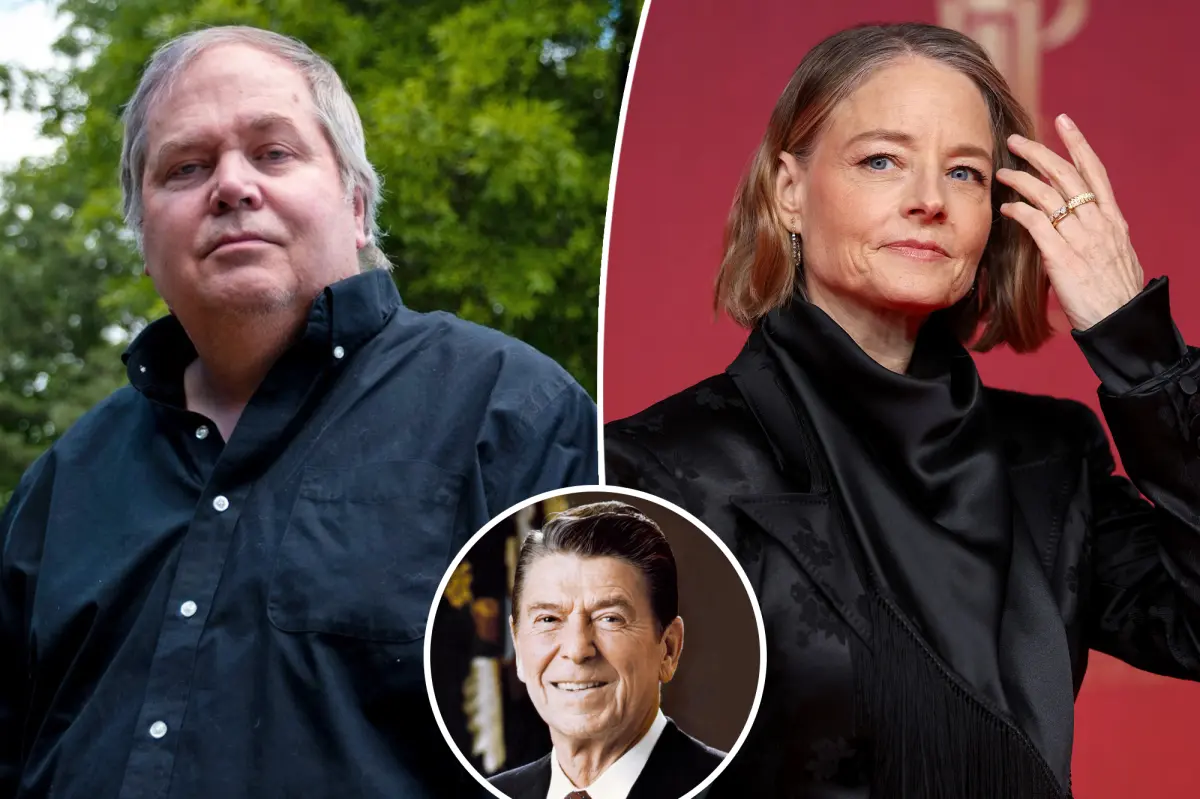
The Persistence of Obsession: John Hinckley Jr.’s Haunting Return to the Stage of Jodie Foster
On a crisp March afternoon in 1981, the trajectory of American history collided violently with the fever dream of a lonely young man clutching a .22 caliber revolver. John Hinckley Jr.’s attempt on the life of President Ronald Reagan was never a traditional political assassination plot; it was a bloody, desperate piece of performance art dedicated to a teenage actress he had never met. More than four decades later, the ghost of that obsession refuses to lie quiet in the archives of twentieth-century trauma. In a striking testament to the durability of parasocial delusion, Hinckley, now a free man navigating the sunset of his life, has once again reached across the chasm of time to publicly declare his "love" to Jodie Foster.
An Unsolicited Echo Across Decades
The revelation emerges from a preview of an upcoming interview on The Mark Joseph Show, wherein Hinckley—now a grey-haired septuagenarian attempting a late-career pivot to folk music—revisits the original sin of his youth. To hear Hinckley speak of Foster today is to witness the strange, calcified remains of a monomania that has survived decades of institutionalization and judicial oversight.
> "I still send her my love," Hinckley remarks in the preview, a sentiment that hangs in the air not as a comforting olive branch, but as a chilling reminder of the asymmetric nature of obsession.
For Foster, who spent her adulthood constructing a fortress of artistic brilliance and fierce privacy to shield herself from the fallout of Hinckley’s madness, the gesture represents a grim, eternal return—an unbidden intrusion from a man who irrevocably tethered his name to hers in the blood of the Washington Hilton pavement.
The Rebrand of a Historical Footnote
This latest overture highlights a broader, deeply modern cultural paradox: the rehabilitation of historical perpetrators through the lens of contemporary media. Since his unconditional release from court restrictions in 2022, Hinckley has attempted to cultivate a gentle persona as an acoustic singer-songwriter and peace advocate, utilizing digital platforms that thrive on morbid curiosity.
Yet, beneath the soft-spoken exterior of the aging troubadour lies the immutable reality of his legacy. His actions paralyzed Press Secretary James Brady, wounded a president, and shattered the illusion of safety surrounding public life. To offer "love" forty-five years later is to misunderstand the nature of his crime entirely; it is a quiet insistence on remaining a protagonist in Foster's life, a narrative wherein he was only ever a devastating, traumatic interruption.
The Tragedy of the Parasocial
Ultimately, Hinckley’s lingering devotion is a relic of an era before the term "parasocial" entered the common lexicon, though it anticipates the very worst excesses of our current attention economy. In the early 1980s, his obsession was viewed as an anomaly of psychiatric illness; today, it reads as a tragic precursor to a culture increasingly unable to distinguish between the screen and reality. As Hinckley continues his quixotic quest for a peaceful twilight, his words serve as a sobering reminder that while the law may grant rehabilitation, some obsessions are written in an ink too dark for time to ever fully bleach away.