The Logistics of Despair: Inside Germany’s War on the Small-Boats Syndicate
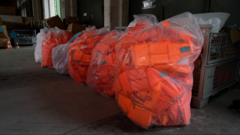
In the sterile gloom of a nondescript German police warehouse, the physical debris of Europe’s border crisis is stacked like cheap merchandise. Here lie deflated rubber dinghies, their grey PVC skins smelling faintly of industrial adhesive; fragile outboard motors; and towering pallets of neon-orange life jackets that offer more of an illusion of safety than actual buoyancy. These are the tools of a grimly lucrative, modern trade—the small-boats smuggling networks that have transformed the English Channel and the Mediterranean into watery battlegrounds. For years, these syndicates operated in the legal grey zones of continental logistics, but a swift and aggressive shift in German strategy has brought the state’s investigative machinery directly to the smugglers' supply chains. Armed with a newly enacted, razor-sharp anti-smuggling law, federal authorities have executed their first major raids, transforming this clandestine depot into a monument to a hardening European resolve.
The legislative teeth behind these raids represent a profound paradigm shift in how Western Europe polices its borders. Where German law once struggled to prosecute facilitators who operated behind layers of digital anonymity, international cash transfers, and fluid logistical networks, the new legal framework treats human smuggling with the same severity as corporate racketeering. These syndicates are no longer viewed by prosecutors as desperate, ad-hoc facilitators, but as highly organized cartel enterprises that source bulk consignments of sub-standard marine equipment from factories in East Asia, routing them through complex European supply chains to the northern coastlines. By criminalizing the mere possession and transport of these unseaworthy vessels, German investigators are attempting to choke the supply chain at its source, crippling the business model before the boats ever touch the water.
Ultimately, this silent warehouse serves as a stark testament to a continent caught in a profound existential transition. As governments across Europe grapple with rising nationalist sentiment and the complex ethics of migration, the clinical efficiency of these police raids offers a politically potent performance of control. Yet, as masked officers catalog the seized outboards and slash the rubber hulls to prevent their reuse, a deeper, more unsettling truth lingers in the damp air. Industrial-scale policing can dismantle the syndicates' logistics and seize their capital, but it cannot dissolve the desperate demand that fuels this black market. Until the geopolitical fractures driving thousands to risk their lives are mended, the battle in the warehouses of Europe remains a sophisticated, necessary game of containment—an elegant, high-stakes effort to police the symptoms of a world fundamentally out of balance.