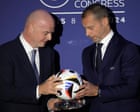
The Zurich Schism: Inside the Quiet Palace Coup to Redraw World Football
For nearly a decade, the glass-and-steel redoubt of FIFA’s Zurich headquarters has operated under a quiet, neo-feudal consensus. When Gianni Infantino succeeded the disgraced Sepp Blatter, the accompanying rhetoric promised a technocratic purification—a cleansing of the Augean stables of global athletic administration. Instead, as his critics tell it, the Swiss-Italian executive has merely modernized the machinery of patronage, wrapping the old transactional politics in the slick vocabulary of global expansion while consolidating a personal fiefdom. The flashpoint that finally transformed years of simmering executive resentment into open mutiny was Infantino’s audacious, almost imperial proposal to sell off a 21 percent stake in the World Cup itself. It was a commodification of the sport's crown jewel that the regional barons of the game decided they could no longer tolerate.
An Unlikely Triumvirate
In response to Zurich’s characteristic obstinacy—and Infantino’s pointed refusal to entertain demands for an independent review of FIFA's governance—an unprecedented counter-hegemony is taking shape. UEFA, the wealthy vanguard of European football; Concacaf, the custodian of the highly lucrative North American market; and the Asian Football Confederation (AFC), representing the sport’s vast demographic future, have forged a quiet, steel-tipped alliance. This is no mere bureaucratic squabble; it is an ideological schism. Having been repeatedly rebuffed by a FIFA presidency that treats dissent as a minor administrative nuisance, this unlikely triumvirate has taken matters into its own hands, actively drafting a rival regulatory framework designed to bypass Zurich’s centralized authority and dismantle the dependency economy that has defined world football for a generation.
> "The era of treating global football as a private fiefdom is reaching its structural limit."
The Battle for the Soul of the Game
What is at stake in this administrative cold war is nothing less than the philosophical foundation of global sports governance. For decades, FIFA has maintained its supremacy through a brilliantly simple democratic distortion: distributing vast sums of development capital to smaller member associations in exchange for unwavering electoral loyalty, effectively neutralizing the leverage of the sport’s actual economic engines. By collaborating on an independent blueprint for the game's future, the rebel confederations are signaling that they are prepared to starve the beast. Whether this movement represents a genuine crusade for democratic transparency or simply a strategic cartelization by football's wealthiest stakeholders remains the central question. What is certain, however, is that the gilded, uncontested absolutism of the Infantino era is facing its first genuine existential threat.