The Prodigal Tactician’s Penance: Roberto Mancini and the Geography of Regret
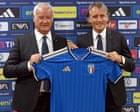
Roberto Mancini has always understood the theatrical demands of Italian public life: the precise drape of an overcoat, the strategic gravity of a post-match press conference, and, when required, the operatic cadence of a public confession. Three years after his sudden, mercenary departure for the glittering, petrodollar-fueled horizons of Saudi Arabia—an exit that felt less like a resignation and more like a midnight elopement with a sovereign wealth fund—the prodigal son has returned to Coverciano. Yet, the atmosphere surrounding his stunning reappointment as head coach of the Azzurri is not one of uncomplicated triumph, but of a carefully staged, deeply felt penance.
"I’m very sorry," Mancini conceded, offering an analogy seemingly plucked from a mid-century neorealist film. "It was like losing the woman of your life. And it means you did something that shouldn’t have been done." In invoking the ghost of a lost love, Mancini bypassed the sanitised vocabulary of modern sports management and spoke directly to the romantic, sentimental heart of the national psyche. To a football-obsessed public, his 2023 defection was a betrayal of a sacred covenant; he had, after all, resurrected Italian football from its darkest nadir to secure a transcendent Euro 2020 triumph, only to trade that hard-won immortality for the sterile luxury of Riyadh. His apology is a tacit acknowledgment that some emotional deficits cannot be cleared by bank transfers, and that the phantom limb of national prestige cannot be replaced by even the most lavish of contracts.
Whether the Italian public possesses the collective grace to accept this contrition remains the central drama of his second act. "Some will be against me … maybe people will forgive," Mancini mused, harboring no illusions about the volatility of his audience. In an era where top-flight football has largely decoupled from regional identity to become a hyper-financialised global circus, his return represents a fascinating anomaly: a high-profile figure pleading for forgiveness in a currency other than victories. To earn that redemption, however, he must do more than wear his regret like a stylish accessory; he must rebuild an national team that has long oscillated between moments of historical brilliance and crushing, systemic mediocrity. "I’m going to try to bring the national team back where it belongs," he promised. In the unforgiving theater of Italian sport, the path from mercenary to martyr is notoriously narrow, and Mancini has just taken his first, fragile step.