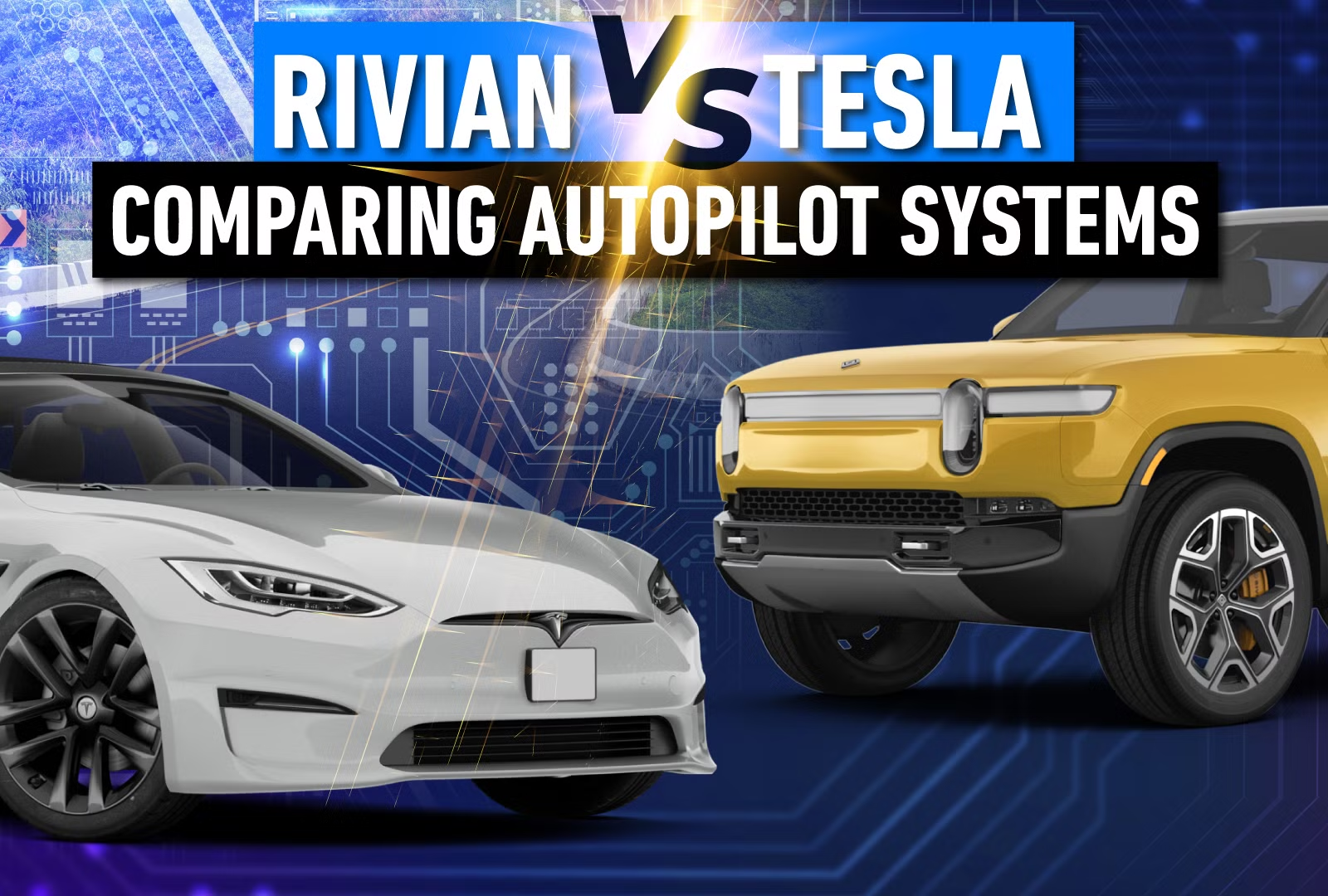
The Ghost in the Steering Column: Chasing Autonomy on the American Asphalt
There is a fleeting, existential shiver that occurs at seventy miles per hour when you voluntarily surrender the physical act of steering to an invisible algorithm. For years, Tesla’s Full Self-Driving (FSD) has operated as the unchallenged, if notoriously erratic, high priest of this liminal space—an audacious system that treats the public highway as a vast, crowdsourced laboratory. To engage FSD is to enter a state of heightened, nervous vigilance; the car negotiates lanes with the assertive, sometimes white-knuckle bravado of a caffeinated teenager. It is a philosophy of pure techno-optimism, championed by Elon Musk’s insistence that cameras alone can replicate human sight, shunning radar and LiDAR in favor of neural networks that learn by doing, occasionally forcing the human driver to intervene with a sudden, adrenaline-spiked grab of the wheel.
```
"To drive with Tesla’s FSD is to engage in a high-stakes dialogue with a brilliant but volatile mind; to drive with Rivian’s Autonomy+ is to be chauffeured by a cautious, rule-bound bureaucrat."
```
In stark contrast stands Rivian’s Autonomy+, a newly minted challenger that approaches the autonomous frontier with a distinctly different set of manners. Where Tesla invites you to leap into the deep end of the AI pool, Rivian—the darling of the affluent, eco-conscious adventure set—hands you a life jacket and points to the shallow end. Behind the wheel of a Rivian equipped with Autonomy+, the experience is characterized by a deliberate, comforting friction. It does not pretend to navigate the chaotic, unpredictable geometry of suburban cul-de-sacs. Instead, it relies on a robust suite of sensors, including high-resolution cameras and radar, confined strictly to pre-mapped, geofenced highways. The system operates with a palpable sense of guardrails, constantly monitoring the driver’s eyes via cabin cameras to ensure that "hands-free" never morphs into "minds-off."
This technological divide exposes a deeper ideological schism within the automotive landscape. Tesla’s offering is a manifestation of Silicon Valley’s classic accelerationist ethos: move fast, deploy beta software to the masses, and iterate in real-time. It is thrilling, boundary-pushing, and occasionally terrifying. Rivian, under the measured stewardship of RJ Scaringe, has opted for a narrative of protective stewardship. Its system is polite to a fault, relinquishing control the moment road markings blur or construction cones appear, preferring the safety of human intervention over the hubris of algorithmic guesswork.
Ultimately, the choice between these two systems is less about engineering supremacy and more about a driver's tolerance for existential risk. Tesla sells a seductive, if flawed, promise of the science-fiction future today, demanding your absolute trust and occasional terror in exchange. Rivian offers a more mature, if heavily mediated, transition into the passenger seat—a system that recognizes that in the pursuit of automotive autonomy, the most valuable luxury a machine can offer is the preservation of peace of mind.