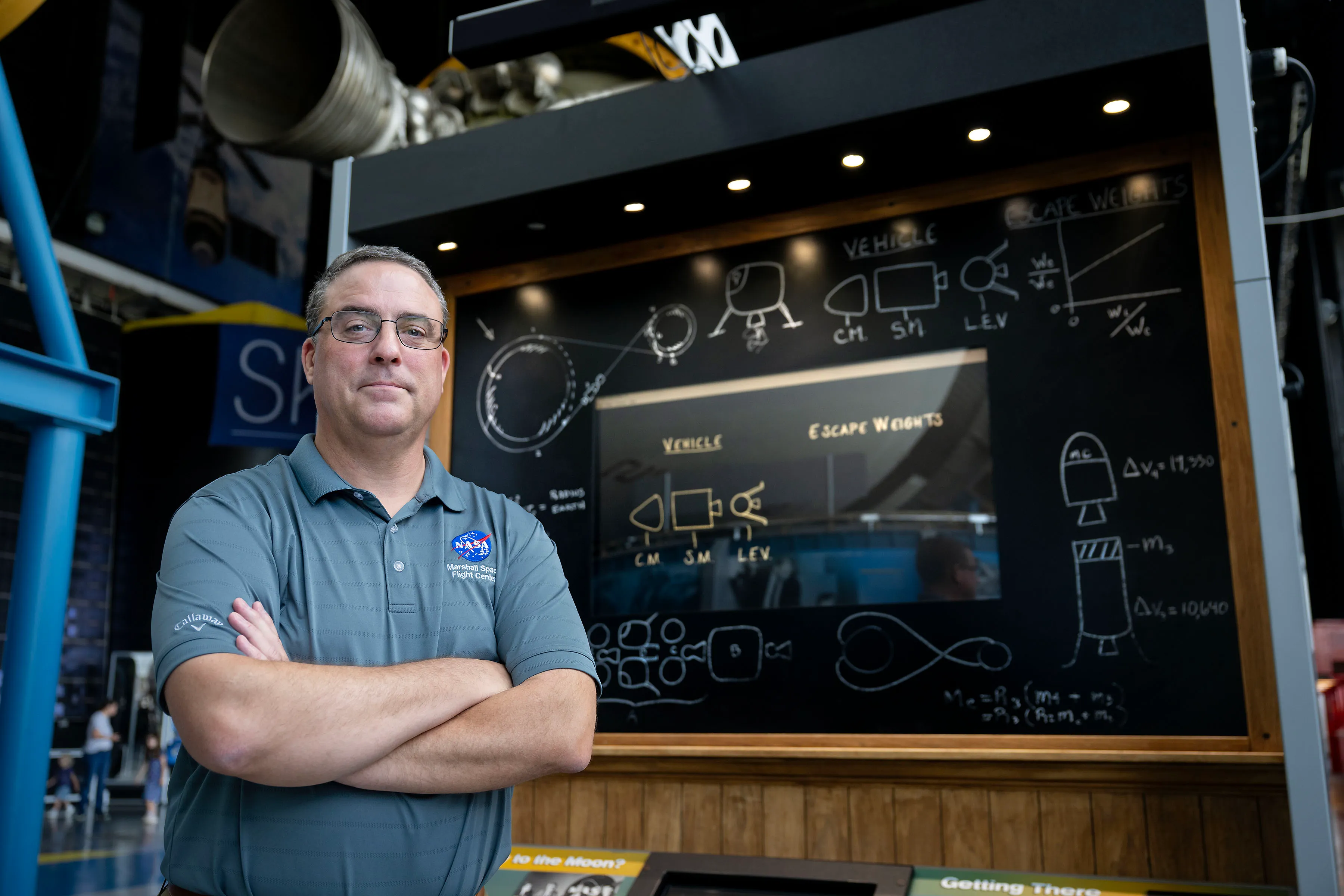
The Celestial Choreographer: Inside the Public-Private Alchemy of NASA’s Return to the Moon
To gaze at the lunar surface today is to look beyond the static monuments of mid-century geopolitical ambition and confront instead the ultimate frontier of twenty-first-century public-private synergy. As NASA’s Artemis campaign transitions from a series of sporadic, legacy-defining triumphs to an active, high-cadence pipeline of exploration, the agency finds itself navigating a profound cultural and technological evolution. No longer a solitary state actor dictating every weld and bolt, NASA has cast itself as an anchor customer in a bustling, commercialized cis-lunar economy. At the epicenter of this seismic shift is Tom Percy, the manager of systems engineering and integration for the Human Landing System (HLS) Program. In the quiet, high-stakes theater of modern aerospace, Percy operates not merely as an engineer, but as a crucial translator between two fundamentally different corporate species: the risk-averse, highly codified bureaucracy of the state space agency, and the hyper-iterative, break-it-to-build-it ethos of commercial partners like SpaceX.
```
"If SpaceX represents the raw, combustive impulse of Silicon Valley translated into towering stacks of stainless steel, NASA remains the institutional anchor of human spaceflight—and Tom Percy is the connective tissue holding them together."
```
Percy’s mandate is a masterclass in managing complexity under pressure. His role as the primary systems liaison with providers—most notably SpaceX as they develop the massive Starship Human Landing System—requires him to reconcile the fast-moving, software-driven paradigm of commercial aerospace with the uncompromising safety margins of human spaceflight. Where traditional aerospace programs relied on decades of slowly matured blueprints, the current paradigm demands an agile, real-time integration of technologies that are being tested and refined in the public eye. Percy must ensure that these radically ambitious landers not only interface perfectly with NASA’s Space Launch System and Orion spacecraft but also survive the brutal thermal environments of the lunar south pole. It is an exercise in diplomatic engineering, balancing the audacity of private venture capital with the meticulous, life-preserving rigor that has defined NASA since the Apollo era.
The technical ledger under Percy's supervision is staggering in its ambition. Returning to the Moon to stay requires solving physics problems that were bypassed during the dash of the 1960s—chief among them the orbital transfer of cryogenic propellants, a complex orbital ballet that must be perfected before a single astronaut can step onto the lunar regolith. To manage this, Percy relies on a philosophy that treats engineering as an elegant, interconnected web rather than a series of isolated checklists. His team must anticipate how a minor software update in a thruster array in Texas might affect the thermal protection systems of a vehicle orbiting thousands of miles above the lunar surface. It is a grueling, invisible choreography, where success is marked by the absence of drama, and where the ultimate reward is the seamless execution of humanity's next giant leap.
Ultimately, Percy’s work with the HLS Program represents more than a logistical achievement; it is the blueprint for how humanity will eventually reach Mars. By forging a repeatable, scalable pathway to the lunar surface through commercial integration, engineers like Percy are decoupling space exploration from the volatile whims of singular political eras. As the Artemis missions accelerate, the image of the solitary astronaut on a barren world is being replaced by a grander, more cooperative vision: a sustained human presence supported by a constellation of private vessels, robotic scouts, and international habitats. In this new space age, the quiet architects working behind the scenes in Huntsville and Houston are the ones quietly redrawing the boundaries of the possible.