The Quiet Conquest of the American Highway
For decades, the story of the American driveway was written in a rigid, predictable script. It was a landscape dominated by the muscular nostalgia of Detroit’s Big Three or the bulletproof, pragmatic hegemony of Tokyo’s engineering giants. Yet, observe any metropolitan interstate today, and the visual vocabulary of American transit has subtly, irreversibly shifted. It is now defined by the razor-sharp, pixelated LED taillights of the Ioniq and the imposing, architectural silhouette of the Palisade. Hyundai, once relegated to the bargain-bin margins of the late-twentieth-century market, has pulled off the rarest of corporate alchemy: a complete transmutation of brand identity from budget punchline to design-forward paragon. Growing faster than any other automaker in the United States, the South Korean titan has bypassed the slow crawl of incremental progress in favor of a ruthless, high-speed ascent.
```
"The South Korean conglomerate has grown faster than any other automaker in the United States, utilizing a masterclass in risk-tolerant engineering."
```
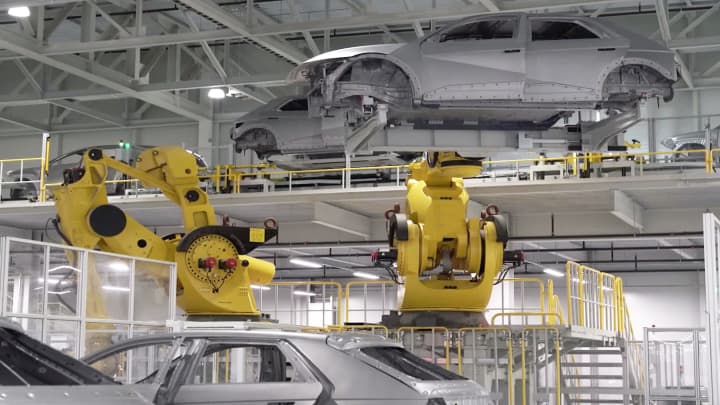
The physical monument to this unyielding ambition is currently rising from the pine-scented flatlands of Bryan County, Georgia. Here, Hyundai is erecting a massive, $7.6 billion "Metaplant"—a colossal industrial ecosystem designed to permanently domesticate its supply chain and pump electric vehicles and batteries directly into the bloodstream of the North American market. This is not merely an expansion of capacity; it is a geopolitical chess move. By anchoring its future in the red clay of the American South, Hyundai is skillfully navigating protectionist regulatory headwinds while executing a high-stakes play to out-manufacture legacy domestic rivals, many of whom remain paralyzed by bureaucratic inertia and the agonizing friction of transitioning away from fossil fuels.
What makes Hyundai’s rise so formidable is its sophisticated understanding of modern consumer desire. While competitors languish in the purgatory between internal combustion and electrification, Hyundai and its sibling brand, Kia, have treated avant-garde design as a democratizing weapon. Their vehicles do not merely transport; they make a cultural statement, blending retro-futurist aesthetics with intuitive, high-tier technology that punches far above its price point. The brand has successfully captured the vital, zeitgeist-defining demographic of the design-conscious suburbanite—drivers who find traditional luxury marques too ostentatious and legacy domestic options too uninspired.
Yet, complacency is a concept foreign to Seoul’s executive suites. The multi-billion-dollar Georgia gamble suggests that Hyundai views its current historic market-share triumphs not as a comfortable plateau, but as a launching pad. By building a facility capable of pivoting dynamically between hybrid and pure electric production, the automaker has insulated itself against the volatile shifts of global demand. As the automotive industry faces a winter of regulatory uncertainty and fluctuating consumer appetites, Hyundai’s calculated aggression has positioned it not just to participate in the future of mobility, but to actively dictate its terms.