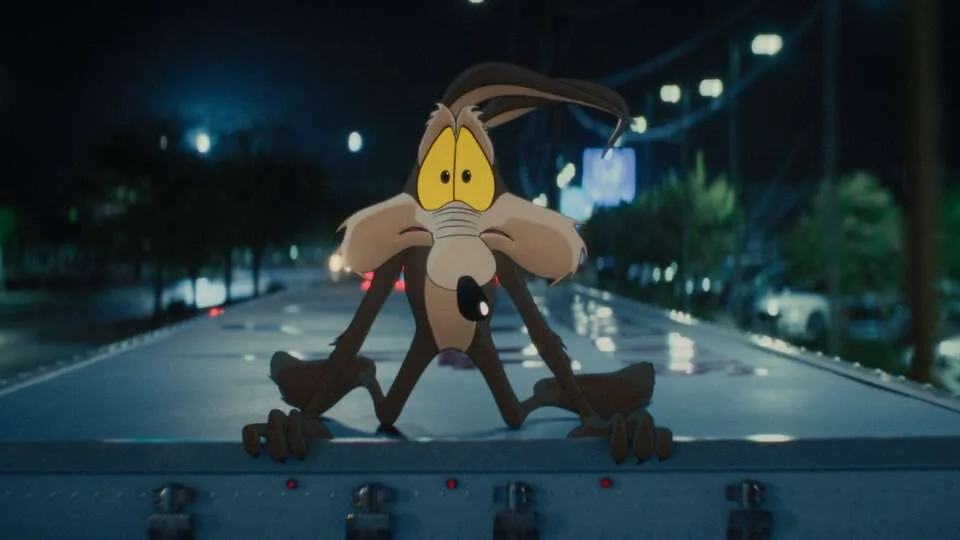
The Gravity of the Ledger: How ‘Coyote vs. Acme’ Nearly Became Hollywood’s Ultimate Write-Off
There is a cruel, poetic symmetry in the fact that Wile E. Coyote’s most formidable adversary was never a supersonic desert bird, but a cohort of media executives wielding spreadsheets. For decades, the coyote’s Sisyphean destiny was governed by the whimsical laws of cartoon physics—gravity delayed, dynamite delayed, the inevitable plunge into the canyon floor. Yet, late last year, the coyote faced a much colder, more absolute law: the modern corporate tax write-off. When Warner Bros. Discovery quietly decided to shelve the completed, $70 million live-action-animation hybrid Coyote vs. Acme to claim a modest $30 million tax depreciation, it felt less like a routine studio pivot and more like a hostile takeover of the creative imagination.
The ensuing outrage from the filmmaking community was swift, fierce, and remarkably unified, transforming a family comedy into a battleground for the soul of theatrical cinema. Directed by Dave Green and starring Will Forte, the film—which pits the iconic cartoon coyote against the corporate behemoth that manufactured his defective anvils—was reportedly tracking exceptionally well with test audiences. It was designed to be a kinetic, nostalgic, and deeply affectionate tribute to classic animation. Instead, it became a hostage of "content curation," a sanitized euphemism for the algorithmic deletion of art. The creative class saw the studio’s maneuver as an existential threat: if a finished, highly rated piece of intellectual property could be vaporized for a fractional short-term gain, then no filmmaker’s labor was safe from the ledger.
> "In the modern studio landscape, films are increasingly treated not as cultural artifacts or even volatile lottery tickets, but as depreciable machinery to be written down on a quarterly balance sheet."
This skirmish is symptomatic of a broader, more sterile paradigm shift in Hollywood. We have entered an era of cinematic asset management, where the traditional romance of the silver screen is routinely sacrificed on the altar of debt reduction and streaming consolidation. The decision to bury Coyote vs. Acme—following the notorious shelving of Batgirl and Scoob! Holiday Haunt—exposed a chilling new reality: to the contemporary conglomerate, a film’s non-existence can sometimes be more profitable than its release. It is an industry behaving like its own worst caricature, embodying the very corporate greed and bureaucratic absurdity that the Road Runner cartoons spent half a century satirizing.
Though the fierce backlash eventually forced the studio to stay the executioner's hand, allowing the filmmakers to shop the project to rival distributors, the survival of Coyote vs. Acme remains a fraught and uncertain victory. It exposed the fragile scaffolding upon which modern film preservation rests. Wile E. Coyote may have narrowly escaped the ultimate anvil of corporate liquidation this time, but the shadow of that falling weight still hangs heavily over every filmmaker daring to create in a landscape governed by the cold calculus of the balance sheet.