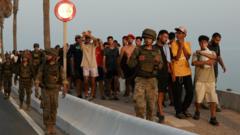
The Digital Borderlands: How Ceuta’s Migrant Crisis Became Europe's Virtual Battlefield
At the jagged tip of North Africa, where the Spanish enclave of Ceuta clings to the Mediterranean coast, the border is far more than a physical barrier of double-layered, ten-meter-high razor wire. It is a stark, shivering fault line of global inequality. When thousands of migrants plunged into the cold sea to swim toward Spanish soil, they did not merely cross a geopolitical boundary; they swam directly into the crucible of Europe’s modern identity crisis. The human drama on the beaches of Ceuta—characterized by exhaustion, desperation, and raw hope—was instantly captured, broadcast, and commodified. What began as a localized humanitarian emergency rapidly mutated into a continent-wide political storm, exposing the fragile, fraying seams of European solidarity.
In the contemporary arena, however, a border crisis is no longer confined to the geography of its occurrence. Instead, it is refracted through the distorting prism of the smartphone screen, where the physical reality of the crossing is weaponized in real-time. Within hours of the first arrivals, social media platforms became battlegrounds of narrative warfare. Algorithmically optimized for outrage, viral video clips stripped of context flooded digital timelines, transforming a complex socio-political event into a visceral, apocalyptic spectacle of "invasion." Populist agitators and digital opportunists seized upon the chaotic imagery—juxtaposing exhausted youths with overwhelmed security forces—to whip up a frenzy of civilizational anxiety.
> "In this hyper-connected echo chamber, nuance was the first casualty, replaced by a binary theater of fear and resentment."
This digital storm has left Spain’s coalition government navigating a treacherous domestic minefield, caught between the humanitarian commitments of its progressive base and the fierce, nationalistic rhetoric of a surging right-wing opposition that has found its voice in online outrage. Yet the reverberations of Ceuta extend far beyond Madrid. It stands as a chilling testament to how easily modern migration can be weaponized by geopolitical actors and amplified by domestic forces. As Brussels watches with familiar, paralyzed unease, the lesson of Ceuta becomes clear: while physical walls may rise and fall along the Mediterranean, the virtual borders constructed of algorithmic fear are proving far more difficult to dismantle, leaving Europe trapped in a cycle of perpetual, reactive panic.