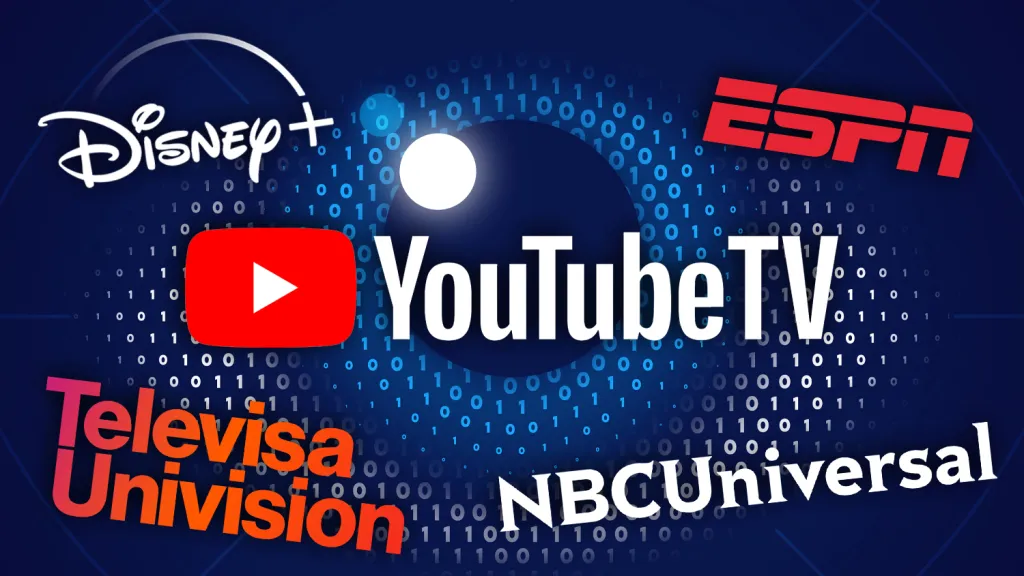
The Great Re-Bundling: Why the NBCUniversal-YouTube Alliance Signals the Twilight of the App Sovereignty
For nearly a decade, the entertainment industry operated under a collective, gold-rush delusion: that every legacy media monolith could carve out its own digital fiefdom, erect high-walled tollbooths, and convince a fatigue-addled public to pay for a dozen disparate subscriptions. It was a period of frantic, expensive balkanization that treated the living room screen as prime real estate to be violently partitioned. But as the cost of customer acquisition skylocked and the novelty of the bespoke app wore thin, the cultural zeitgeist quietly revolted against subscription fatigue. Enter the strategic alliance between NBCUniversal and YouTube—a partnership that represents not merely a corporate compromise, but a white flag in the costly war of attrition known as the Streaming Wars.
```
"The battlefield has shifted from the vanity of exclusive platforms to the cold reality of aggregated attention."
```
By integrating NBCUniversal’s premium content ecosystem directly into the plumbing of YouTube’s massive distribution network, the media giant is acknowledging a fundamental shift in the attention economy. YouTube is no longer just the chaotic, democratized repository of home videos and amateur vloggers; it has matured into the dominant ecosystem where modern audiences spend their unstructured time, a default setting for the digital native. For NBCUniversal, migrating its catalog—from sports broadcasts to prestige television—closer to YouTube’s algorithmic slipstream is a maneuver of pure realpolitik. It is an admission that in the current climate, owning the platform is less important than being visible on the one that already commands the populace’s muscle memory.
This alliance previews a second act of the streaming wars that looks suspiciously like a high-tech reconstruction of the legacy cable bundle. Having spent billions of dollars to escape the tyranny of the traditional television package, media conglomerates are discovering that the consumer actually craves a singular portal. The irony is exquisite: the industry has spent a decade dismantling the old architecture only to rebuild it under the sovereign rule of Silicon Valley’s largest platforms. In this new era, success will not be measured by the ideological purity of a standalone application, but by how seamlessly a studio can rent space inside the mega-portals of YouTube, Amazon, and Apple.
Ultimately, the NBCUniversal-YouTube deal marks the transition from an era of romantic expansion to one of pragmatic consolidation. We are witnessing the twilight of app sovereignty, replaced by a sophisticated, platform-agnostic distribution model where convenience triumphs over brand fidelity. For viewers, this heralds a welcome simplification of the digital dashboard. For the entertainment boardrooms, however, it is a sober reminder that in the modern attention economy, the platform always wins, and the content creators must eventually pay tribute to the gatekeepers of the feed.