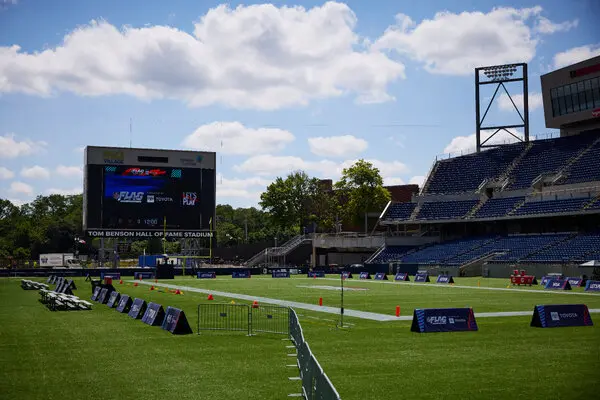
The Empty Colosseum: How the NFL’s Grand Promise in Canton Turned to Dust
In the cartography of American sports, Canton, Ohio, has long functioned as a sacred site of secular pilgrimage—the cradle where the National Football League was baptized in a Hupmobile showroom in 1920. But by 2014, the city, like so many of its Rust Belt siblings, was wearing its economic obsolescence on its sleeve, a landscape of faded brick and quiet factories longing for a modern resurrection. Enter the "Hall of Fame Village": a glittering, $900 million municipal dreamscape of luxury hotels, indoor waterparks, and high-tech convention centers, all anchored by the existing Pro Football Hall of Fame. It was pitched to residents and investors not merely as a real estate venture, but as a civic panacea—a Faustian bargain struck with the country’s most lucrative cultural cartel, promising to transform a proud, struggling town into a year-round Disneyland of gridiron devotion.
The Cartel’s Retreat
Yet, the architecture of hope is notoriously fragile when built on the shifting sands of corporate philanthropy. Over the ensuing decade, as hundreds of millions of dollars vanished into the red clay of Ohio, the grand vision began to curdle under the weight of ballooning debts, Byzantine financing structures, and chronic delays. The most devastating blow, however, was psychological as much as financial. The NFL, which had initially lent its formidable brand and rhetorical weight to the project, quietly began to retreat from the huddle. As costs mounted, the league distanced itself from the grand design, leaving local developers and city officials to scramble in the shadow of half-built monuments. For a league that generates billions in annual revenue, Canton was a useful backdrop for seasonal nostalgia, but a poor bet for long-term venture capital; the shield, it turned out, protects its own margins first.
> "We were promised a transformation that would put Canton back on the national map. Instead, we got a construction site that feels more like an archaeological dig of a future that never arrived."
The Architecture of Absence
Today, the Hall of Fame Village stands as a poignant monument to the hubris of modern sports-anchored urbanism. Visitors to the site do not find a bustling metropolis of leisure, but rather a disorienting patchwork of the completed and the abandoned—a state-of-the-art youth sports complex flanked by silent, dirt-rimmed expanses where luxury suites and retail promenades were meant to rise. It is a cautionary tale written in concrete and rusted rebar, a stark reminder of what happens when a community stakes its economic survival on the ephemeral whims of professional sports. Canton is left to contemplate a familiar, bitter Rust Belt truth: that in the high-stakes game of corporate revitalization, the home team rarely wins, and the circus always leaves town eventually.