The Bureaucracy of Biology: Inside the FDA’s Quiet Bifurcation of Tech and Therapeutics
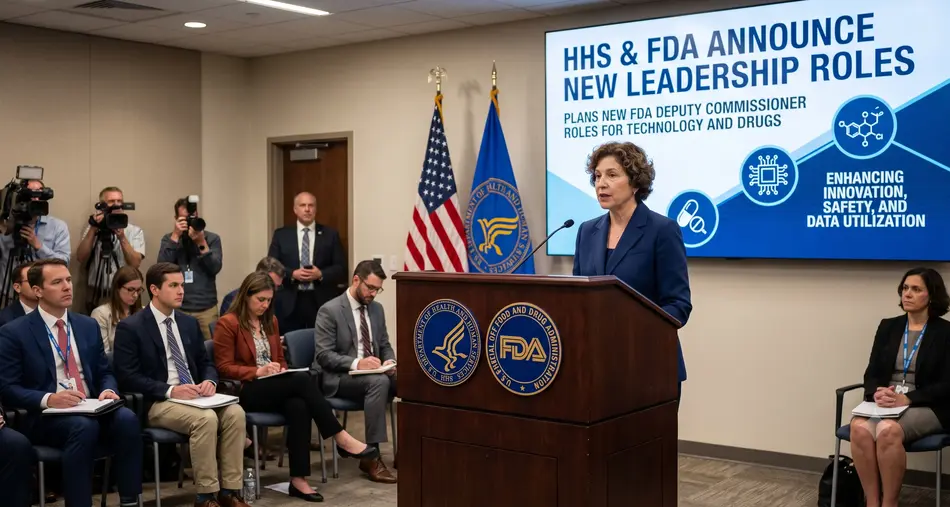
Washington has long been accused of regulating the future with the tools of the past, treating the dizzying breakthroughs of the twenty-first century with a bureaucratic apparatus forged in the twentieth. In a bid to close this existential latency loop, the Department of Health and Human Services is preparing a quiet but seismic restructuring of its crown jewel, the Food and Drug Administration. According to sources familiar with the matter, HHS plans to establish two new deputy commissioner roles: one dedicated exclusively to technology, and another to drugs. The decision represents more than a mere shuffling of the federal organizational chart; it is a tacit admission that the sheer velocity of scientific progress has outstripped the agency's traditional, monolithically organized leadership.
The Algorithmic Apothecary
The creation of a dedicated deputy commissioner for technology speaks to a broader cultural and economic reality: medicine is no longer merely chemical; it is computational. The modern clinic is increasingly governed by predictive algorithms, machine-learning diagnostic tools, and digital therapeutics that blur the line between software and surgery. By carving out a distinct domain for technology, the FDA signal-flashes its intention to grapple with the wild-west frontier of artificial intelligence, where code acts as a therapeutic agent and data streams are as critical to patient outcomes as sterile technique. This is regulatory triage for a digital age—an attempt to build a fortress of technical expertise capable of translating the chaotic momentum of Silicon Valley into safe, scalable clinical realities.
The High-Stakes Pipeline
Simultaneously, the bifurcation elevates the stewardship of therapeutics to its own singular orbit. The incoming deputy commissioner for drugs will inherit a landscape dramatically altered by the immense financial gravity of blockbusters like GLP-1 weight-loss agonists and the bespoke, staggeringly expensive promises of gene editing and personalized immunotherapy. In the high-stakes theater of modern pharmaceutical capitalism, where single regulatory decisions can swing billions of dollars in market capitalization overnight, this role will serve as both a gatekeeper and a pressure valve. The division of labor suggests that the sheer volume and complexity of the drug pipeline—where molecular chemistry now intersects with global supply-chain fragility—requires an undivided, hyper-specialized focus that a single, generalized leadership structure could no longer realistically sustain.
Governing the Future
Ultimately, this administrative realignment exposes a deeper truth about the state of modern governance. As human longevity and technological capability advance at exponential rates, the institutions tasked with safeguarding public trust must either evolve or risk obsolescence. By dividing its focus between the silicon of technology and the carbon of pharmacology, the FDA is attempting to construct a dual-engine architecture capable of steering the nation through an era where the very definition of "medicine" is being rewritten daily. Whether this administrative mitosis will streamline progress or simply invent new corridors of red tape remains the multi-billion-dollar question hanging over the capital.