The Architecture of an Icon: Dolly Parton’s Steely, Radiant Legacy
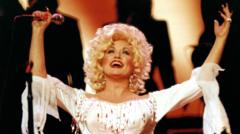
To understand Dolly Parton was to understand the strategic brilliance of the hyper-visible. For over half a century, she moved through the global cultural landscape like a gilded anomaly, clad in towering peroxide wigs, sky-high heels, and rhinestones that fractured the light like stained glass. Yet, to dismiss her as mere camp was to fall headlong into the very trap she so elegantly set. In the wake of her passing, as the world reflects on an irreplaceable titan of American song, we are reminded that her caricatured persona was both an impenetrable shield and a brilliant Trojan horse. Beneath the theatrical artifice lay a formidable intellect and a steely determination that fundamentally reshaped the architecture of modern celebrity. She was a master psychologist of her own public, an auteur who understood—long before the advent of the curated digital age—that one could absolute control the narrative by becoming the spectacle.
The Literary Pen and the Rhinestone Shield
At the core of her mythos lies a songwriting prowess that was nothing short of literary. Parton’s pen possessed a cinematic clarity, capable of distilling the quiet, agonizing triumphs and tragedies of the human condition into three-minute secular gospels. In "Coat of Many Colors," she transformed the indignities of Appalachian poverty into a masterclass on dignity and grace; in "Jolene," she captured the raw, pleading vulnerability of romantic insecurity with a haunting, modal economy. Her music did not merely cross genres; it bridged deep cultural chasms. When she sang of the working-class grind in "9 to 5," she did so with a syncopated, typewriter-tapped defiance that remains a permanent anthem of labor. She proved that pop-cultural ubiquity did not require the dilution of her sharp, observational edge, remaining a devastatingly precise chronicler of American life.
Sovereignty in a Fractured World
Beyond the melodies, Parton’s enduring monument is her unparalleled autonomy in an industry historically engineered to exploit female talent. In an era when women in country music were routinely commodified and discarded, she retained the rights to her publishing catalog—a move of quiet, revolutionary defiance that secured her financial empire (most famously exemplified by her polite refusal to surrender half of "I Will Always Love You" to Elvis Presley). This ruthless business acumen was always cloaked in a disarming, self-deprecating wit, a deliberate charm offensive that allowed her to remain a rare, unifying figure in an increasingly polarized world. She managed to belong to everyone—the secular and the devout, the marginalized and the traditional—without ever compromising her own essential mystery. She leaves behind not just a catalog of incomparable song, but a blueprint for survival, grace, and triumphant self-determination.