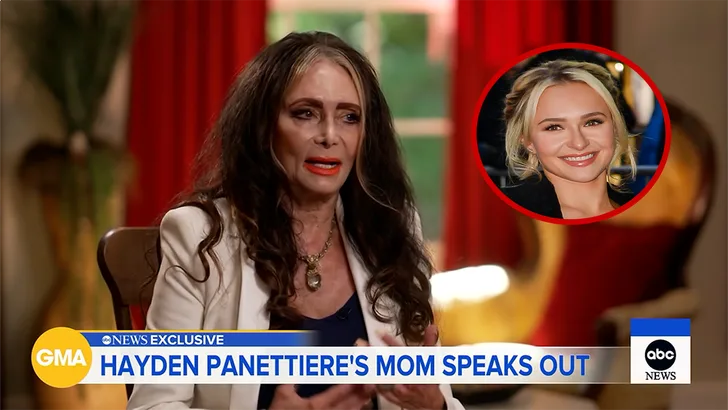
There is a specific, terrible silence that accompanies the collapse of a mother’s world—a sudden, absolute drop in atmospheric pressure where grief ceases to be a mere emotion and becomes a physical state of suspension. For Lesley Vogel, that silence arrived with the devastating, unthinkable report of her daughter Hayden Panettiere’s death. Sitting down with ABC News reporter Rhiannon Ally, Vogel recounted the exact moment the horizon of her life fractured, describing a sensation of going entirely "numb." It is a psychological defense mechanism as old as tragedy itself: the mind’s desperate, immediate strike to mute a reality too lacerating to process in real time.
The transition from the hyper-visible, gilded cage of child stardom to the stark, cold finality of such news is a trajectory no parent is equipped to navigate. Vogel’s televised reflection was not merely an exercise in public mourning, but a quiet autopsy of shock. In her conversation with Ally, she painted a portrait of a mother caught in the liminal space between denial and the crushing weight of permanence, admitting that she still struggles to grasp the reality of her daughter’s absence. To lose a child who lived so vividly in the public imagination is to mourn both a private soul and a cultural fixture, making the quiet act of acceptance an even more elusive summit to climb.
Ultimately, Vogel’s raw dispatch from the epicenter of loss underscores the cruel juxtaposition of celebrity and mortality. While the public consumes the tragedies of the famous with a detached, insatiable curiosity, the immediate family is left to inhabit the wreckage long after the cameras dim. In voicing her paralysis, Vogel gave shape to the quiet vacuum that remains when the noise of the world is stripped away, leaving only a mother grappling with the impossible truth that a life she ushered into the world has slipped quietly into the dark.