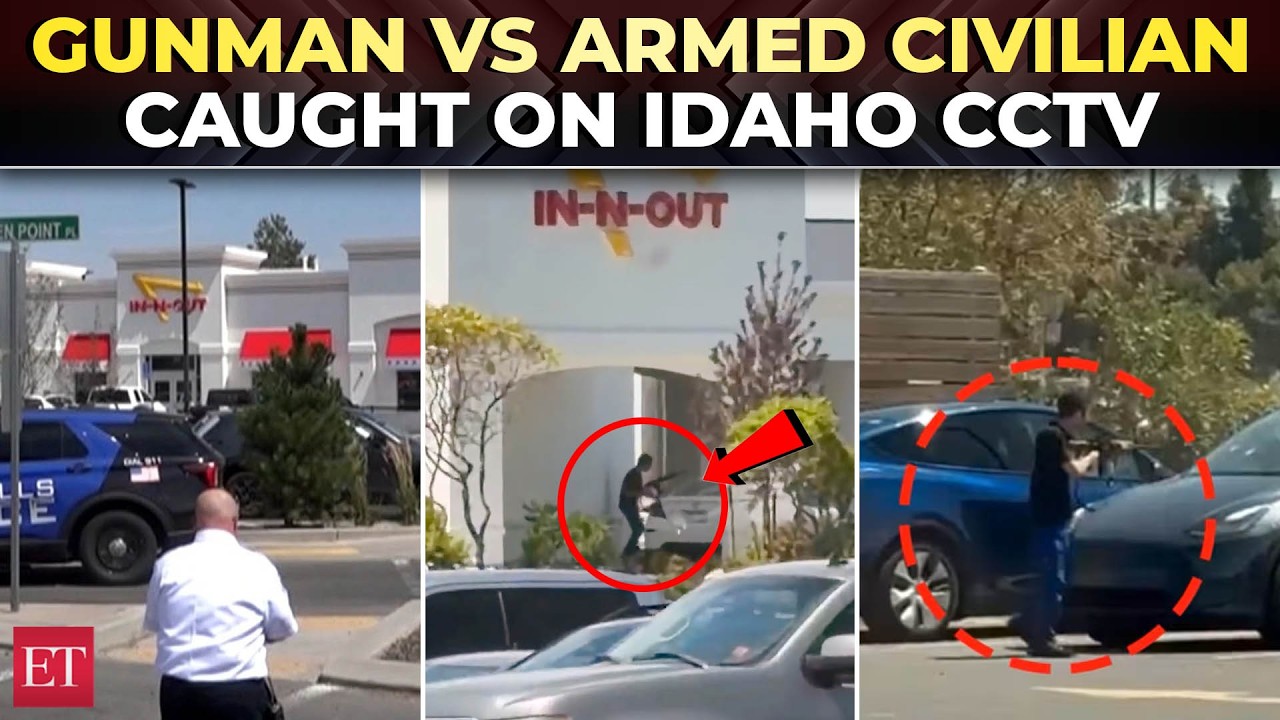
The Double-Double and the Gun: How a Mundane Idaho Drive-Thru Became a Battlefield
The neon palm trees of In-N-Out Burger have long stood as illuminated sentinels of a wholesome, mid-century American idealism—a sanctuary of paper hats, yellow-and-red nostalgia, and predictable culinary comfort. Yet, in the parking lot of a Twin Falls, Idaho franchise, this pristine consumerist liturgy was violently shattered into safety glass and terror. A sudden, eruptive burst of gunfire transformed a routine drive-thru lane into a kinetic theater of survival. As panic rippled through the idling sedans, the incident transcended the depressingly familiar choreography of the modern mass shooting, mutating instead into a high-stakes duel when an armed bystander refused to remain a casualty of circumstance.
According to reports from The Idaho Statesman, newly surfaced video footage captures the harrowing moment that Jordan Salinas, a citizen who had driven directly into the crosshairs of the unfolding nightmare, thrust himself into the fray. As the gunman unleashed a barrage of bullets upon the unsuspecting patrons, Salinas did not flee; instead, he drew his own pistol, returning fire with a desperate, defensive urgency. The grainy, trembling footage operates as a visceral artifact of contemporary Americana, capturing the terrifyingly brief distance between a mundane evening errand and a life-or-death firefight. In the video, Salinas’s counter-offensive appears not as the polished choreography of a cinema screen, but as a raw, adrenaline-fueled bid to halt a slaughter, his muzzle flashes cutting through the Idaho dusk as bystanders scrambled for cover.
> "The grainy, trembling footage operates as a visceral artifact of contemporary Americana, capturing the terrifyingly brief distance between a mundane evening errand and a life-or-death firefight."
This explosive confrontation in Twin Falls instantly thrusts Salinas into the center of a national Rorschach test, embodying the highly contested archetype of the "good guy with a gun." To a significant portion of the public, his decisive intervention will be heralded as a triumphant vindication of armed self-defense—proof of the citizen-soldier’s utility in an era of unpredictable public peril. To others, the spectacle of a fast-food parking lot transformed into an active war zone serves as a grim indictment of a society so saturated with firearms that survival has become a matter of civilian crossfire. Ultimately, the terrifying reality of the Twin Falls shooting lies in its chilling familiarity: the realization that the thin line separating the mundane from the catastrophic is increasingly policed not by institutional shields, but by the split-second reflexes of a stranger with a concealed weapon.