The Anatomy of Grief and Guts: Inside the Return to ‘Crystal Lake’
There is a stubborn, dark romance to the American summer camp—a pastoral mythos of innocence and lakeside idylls that horror has spent more than forty years systematically dismantling. At the heart of this cultural deconstruction lies Camp Crystal Lake, a fictional topography where grief curdles into a very specific, damp brand of mid-century gothic tragedy. With the upcoming prequel series Crystal Lake, scheduled to premiere on Peacock on October 15, the franchise retraces its blood-spattered steps to the genesis of its haunting. This is not merely another exercise in cinematic grave-robbing; it is an investigation into the psychological rot that preceded the hockey mask. By focusing on the tragedy of Pamela Voorhees before her son Jason became an immortal icon of silent butchery, the series promises to transform a foundational slasher myth into a rich, albeit deeply disturbing, character study of maternal unraveling.
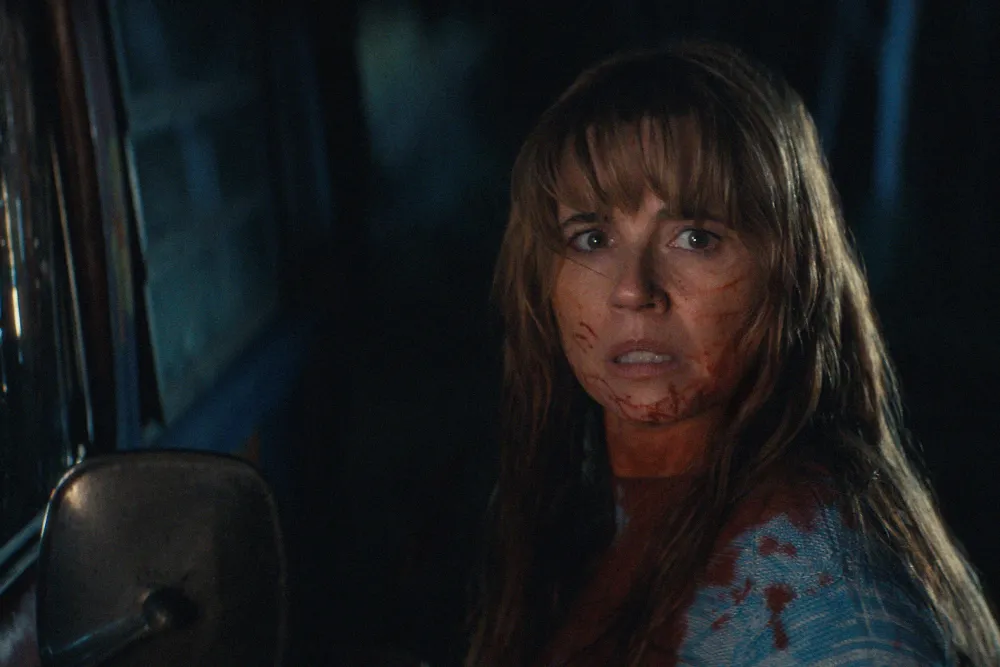
Stepping into the tragic, frayed cardigan of Pamela Voorhees—originally immortalized with manic, wild-eyed intensity by Betsy Palmer—is Linda Cardellini. An actress of remarkable emotional elasticity, Cardellini brings a grounded, empathetic intelligence to a figure historically reduced to a monstrous caricature of maternal devotion. Yet, those expecting a bloodless, intellectualized prestige drama will find themselves sorely mistaken. Cardellini has recently teased that the production is steeped in a relentless, uncompromising viscosity, describing the set as unapologetically "gory" and "gross," with "blood everywhere." It is a deliberate aesthetic choice that honors the franchise’s grindhouse roots while elevating its emotional stakes; Cardellini's Pamela is positioned not merely as a monster in the making, but as a woman drowning in a literal and metaphorical deluge of violence.
> "It is gory, it is gross, and there is blood everywhere."
> — Linda Cardellini on the visceral reality of Crystal Lake
This commitment to sensory excess suggests that Crystal Lake understands the delicate alchemy of the slasher genre. Alongside a cast that includes William Catlett, Cardellini navigates a narrative landscape that must balance the heavy, sorrowful weight of impending tragedy with the tactile thrills that horror disciples demand. In an era where contemporary television often mistakes cynicism for maturity—frequently opting for desaturated tones and bloodless, off-screen demises—this prequel seems poised to reclaim the operatic, wet horror of the 1980s. It asks a modern audience to confront the physical reality of violence, treating blood not merely as a cheap shock tactic, but as the inevitable medium through which a mother’s catastrophic grief must be expressed. When the series debuts this autumn, viewers will discover whether this return to the water is a triumphant baptism or a suffocating descent into an inescapable red tide.