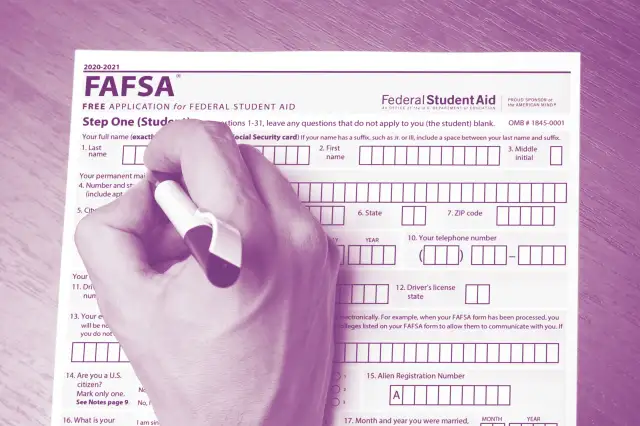
The Liturgy of Aspiration: Inside the Quest to De-Toxify the FAFSA
For decades, the Free Application for Federal Student Aid (FAFSA) has functioned as a grueling American rite of passage—a secular confessional where middle- and working-class anxieties are laid bare on digital grids. It was historically less an administrative gateway and more of an annual psychological trial, requiring families to navigate a labyrinth of tax codes, asset declarations, and Byzantine terminology at kitchen tables illuminated only by the cold blue light of laptop screens. This season, however, federal education officials are promising a truce in this war of bureaucratic attrition. With systemic overhauls designed to streamline the notoriously defensive interface, the Department of Education asserts that the newly minted form is not merely a technical update, but an act of structural empathy, promising a simpler, swifter path toward higher education’s increasingly elusive golden ticket.
The Architecture of Frictionless Entry
The design of this year’s overhaul pivots on radical reduction. What once resembled a hostile tax audit has been shorn of its most redundant inquiries; the number of questions has been slashed dramatically, and a direct data exchange with the Internal Revenue Service has been instituted to bypass the manual, error-prone transcription of financial history. To the technocrats who engineered this redesign, the new FAFSA is a triumph of behavioral architecture, transforming a digital gauntlet into a frictionless slide. Yet, for the millions of high school seniors and weary parents navigating the system, the stakes remain starkly existential. While the interface may have shed its friction, it has not shed its gravity: in an era of soaring tuition costs and precarious social mobility, the speed at which one completes the form is still secondary to the financial verdict it eventually delivers.
The True Cost of Admission
Ultimately, a smoother digital portal cannot entirely mask the underlying volatility of the higher education market. While policymakers celebrate the dissipation of "form stress," the larger, more systemic anxiety surrounding the solvency of the American collegiate dream persists unabated. A sleeker FAFSA may expedite the administrative queue, but it does not lower the soaring cost of tuition, nor does it guarantee that the aid distributed will match the gargantuan reality of modern university bursar bills. In making the machinery of aid invisible, the state may have succeeded in easing the initial trauma of entry, but the real test of this reform will lie not in the speed of the clicks, but in whether it truly democratizes access to a system increasingly stratified by wealth. For now, families will press "submit" with a faster load time, hoping the machinery of opportunity is as generous as it is efficient.