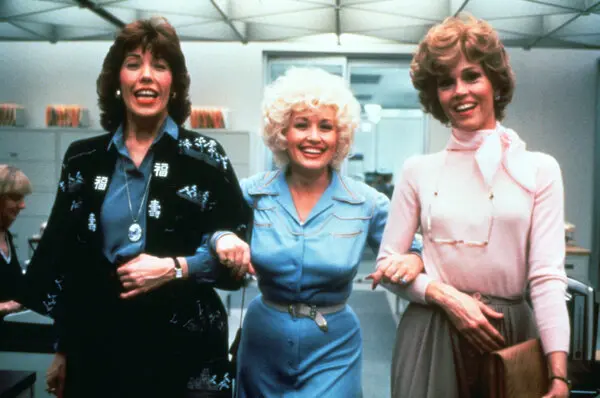
The Sovereign Screen: How Dolly Parton Weaponized Her Hollywood Stardom
When Dolly Parton descended upon Hollywood during her golden cinematic run of the late 1970s and 1980s, she arrived not as a supplicant to the dream factory, but as a fully realized sovereign state wrapped in rhinestones and chiffon. In an era when the film industry routinely disassembled women of singular aesthetic into digestible, compromised archetypes, Parton executed a quiet, brilliant coup. To watch her during her cinematic peak is to witness a masterclass in self-determination. Her onscreen characters were never victims of their environments; instead, they were sharp-eyed pragmatists who understood, with absolute clarity, the exact market value of their labor, their warmth, and their dignity.
```
"There is a profound steeliness beneath the high-camp facade, a quiet refusal to let the industry dictate the terms of her visibility."
```
Consider the deliberate taxonomy of her filmography, where she repeatedly inhabited women operating at the margins of traditional institutional power. As Doralee Rhodes in 9 to 5, she transformed the stereotyped, hyper-sexualized secretary into an engine of workplace revolution, famously hogtying her predatory boss with the practiced ease of a backwoods rancher. In The Best Little Whorehouse in Texas, her Mona Stangley ran her establishment not as a den of exploit, but with the cool, bureaucratic efficacy of a seasoned corporate executive. Even as Truvy Jones in Steel Magnolias or the accidental therapist of Straight Talk, Parton championed the working-class matriarch—women whose labor, whether emotional, physical, or entrepreneurial, was the literal glue of their communities. Under a lesser performer, these roles might have dissolved into broad caricature, but Parton infused each with a formidable interiority.
This onscreen agency was no mere accident of casting; it was the cinematic extension of an off-screen philosophy that prioritized absolute control. By maintaining ownership of her publishing, her image, and her narrative, Parton ensured that Hollywood could never truly colonize her persona. Her filmography stands as a brilliant testament to a rare kind of stardom—one where the hyper-feminine aesthetic was never a concession to the male gaze, but rather a brightly colored armor. In a town notorious for extracting the vulnerability of its starlets, Parton renegotiated the terms of engagement, proving that one could wear the mask of a caricature while remaining the most formidable strategist in the room.