The Shifting Tides of East Asian Football: As South Korea’s Premier League Dynasty Fades, Japan Rises
A summer of institutional scandal and sporting decline threatens to leave England’s top flight without South Korean representation for the first time in nearly two decades.
***
Football has a way of turning geopolitical prestige into a fleeting currency. For nearly twenty years, South Korea enjoyed an undisputed hegemony over East Asian representation in the English Premier League—a gilded era inaugurated in 2005 when the indefatigable Park Ji-sung first trod the turf of Old Trafford. Yet, this summer has felt less like a seasonal transition and more like a cultural twilight. The national team’s catastrophic World Cup campaign was merely the prelude to a deeper, institutional rot: a police investigation into the domestic football association, the unsettling exhumation of referee bribery scandals from a decade prior, and the sobering realization that the upcoming Premier League season may feature no South Korean players for the first time in nineteen years. It is a sudden, quiet erasure of a footballing identity that once defined the league’s globalized era.
The Twilight of the Giants
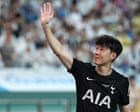
To understand the gravity of this impending void is to recall the cultural osmosis that occurred when Park first donned the red of Manchester United. He was not merely a utility player; he was the vanguard of a nation's sporting ambition, a tireless engine who won four league titles and captured the imagination of Seoul and Stretford alike. When Son Heung-min arrived at Tottenham Hotspur in 2015, he elevated this legacy from industrious patriotism to world-class artistry, blending a lethal grace with a charismatic diplomacy that made him a beloved fixture of the British game. For two decades, Saturday afternoons in South Korea were anchored by the broadcast rhythms of the Premier League. Now, as Son’s career enters its late autumn and no clear successors wait in the wings, that intimate, cross-continental dialogue threatens to fall silent.
> "The decline is not merely a matter of talent, but of structure. South Korea relied on generational icons; others built systems."
A New Dawn in the East
While Seoul grapples with its existential malaise, Tokyo is enjoying a serene dawn. The vacuum left by South Korea's retreat is being swiftly, systematically filled by a contingent of Japanese talent whose ascent feels less like a series of individual miracles and more like the triumph of meticulous structural planning. Where South Korean football relied on the singular, heroic burdens of Park and Son, the Japanese model has exported a highly technical, tactically fluid cohort capable of thriving in the relentless intensity of the English game. This shifting of the guard on the pitches of England mirrors a broader regional realignment: one nation paralyzed by administrative scandal and athletic stagnation, the other ascending with a quiet, collective precision that suggests the capital of East Asian football has decisively relocated.