The Geography of Retribution: Eleven Dead in Southern Lebanon as the Borderlands Bleed Anew
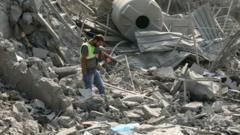
In the jagged, sun-bleached hills of southern Lebanon—where the ancient quiet of olive groves is perpetually fractured by the architecture of modern warfare—violence has once again asserted its grim, cyclical dominance. Eleven people were killed in a series of intense Israeli airstrikes, according to Lebanese authorities, marking another bloody chapter in an escalating border conflict that refuses to stay contained. The detonations, which reverberated across a landscape already scarred by decades of hostility, reduced concrete structures to plumes of gray dust, transforming quiet residential precincts into sudden, smoking theatres of grief.
The Israel Defense Forces framed the devastating bombardment as a clinical transaction of deterrence, stating they had targeted "Hezbollah terror infrastructure" in direct retaliation for an earlier assault on Israeli soldiers. This sterile taxonomy of military engagement—where civilian neighborhoods are recast as strategic coordinates and human loss is filed under the ledger of defensive necessity—does little to soothe the terror of those caught in the crossfire. For the residents of these border towns, the skies have become an unpredictable source of fire, and the ground beneath them a fragile stage for a proxy war that threatens to consume what remains of their regional stability.
> "The language of escalation has its own exhausting grammar, one where every action demands a disproportionate reaction, and the currency of exchange is always human life."
For Lebanon, a nation already suffocating under the weight of political paralysis and a protracted economic collapse, this latest spasm of violence feels ominously familiar. The southern frontier has long functioned as a geopolitical fault line, a place where the sovereignty of a fragile state is routinely bypassed by the heavily armed choreography between Israel and Hezbollah. As local emergency workers sift through the rubble of the latest strikes, rescuing the wounded and recovering the dead, the distinction between combatant and bystander continues to blur, leaving behind a community trapped in a permanent state of apprehension.
As the dust settles over the fractured terraced hills, the international community watches with familiar, paralyzed concern, acutely aware of how easily a localized spark can ignite a regional conflagration. The tragedy of the eleven dead is not merely in the abruptness of their end, but in the grim certainty that they will likely not be the last. In this landscape of beautiful, haunted hills, peace remains a fleeting luxury, existing only in the brief, tense intervals between the sirens and the strikes.