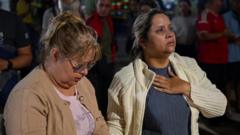
Earthquake Deals Devastating Blow to Venezuela Amid Deepening Political Uncertainty
CARACAS — A pair of powerful twin earthquakes has struck Venezuela, compounding the nation's severe humanitarian struggles and bringing further devastation to a population already grappling with historic geopolitical instability. The seismic events, which registered significant magnitudes and shook the northern coastal region including the capital city of Caracas, have caused widespread structural damage, collapsed utility grids, and left emergency services overwhelmed. Local authorities are scrambling to assess the casualties and the full extent of the destruction, even as rescue efforts are hindered by ongoing aftershocks and severely depleted domestic resources.
The natural disaster strikes at an exceptionally fragile moment in Venezuela’s modern history. It has been less than six months since the country's former leader, Nicolás Maduro, was apprehended by United States forces in a dramatic and highly controversial military operation. Maduro’s sudden removal plunged the South American nation into a deep political transition, leaving a fractured governing coalition and an opposition struggling to establish a unified administrative authority. This political vacuum has severely compromised the state’s capacity to coordinate a cohesive emergency response to the current disaster.
"The timing of these earthquakes could not be worse for Venezuela," said Elena Sandoval, a Caracas-based political analyst specializing in Latin American crises. "The country has no centralized, fully functioning administrative framework to deploy massive disaster relief. The healthcare system was already on the brink of collapse due to years of economic stagnation, and now hospitals are operating on backup generators to treat hundreds of incoming casualties." International aid organizations have expressed immediate concern over the distribution of emergency supplies, noting that the lack of clear leadership in Miraflores Palace complicates diplomatic channels for foreign aid coordination.
As search and rescue teams continue to sift through the rubble of collapsed buildings, the international community is facing pressure to intervene. Both regional neighbors and global superpowers are monitoring the situation closely, weighing humanitarian imperatives against the delicate geopolitical stakes of the post-Maduro era. In the coming days, the resilience of Venezuela's provisional leadership will be put to its ultimate test as the nation attempts to rebuild its physical infrastructure while simultaneously navigating its highly uncertain political future.