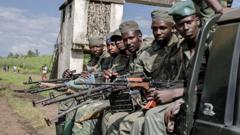
DR Congo Escalates Diplomatic Feud, Taking Rwanda to International Court Over Decades of Conflict
The government of the Democratic Republic of Congo (DRC) has formally initiated legal proceedings against neighboring Rwanda at the international court, escalating a decades-long dispute over security, sovereignty, and regional stability. Kinshasa accuses Kigali of committing systematic violations of international law, breaching its territorial integrity, and backing armed rebel groups within its borders. The legal action marks a significant shift from diplomatic skirmishes to a formal judicial arena, targeting actions dating back to the immediate aftermath of the 1994 Rwandan genocide.
The geopolitical friction between the two central African nations is deeply rooted in the complex security vacuum of eastern DRC. Following the 1994 genocide, hundreds of thousands of Rwandan refugees, including Hutu militia members responsible for the massacres, crossed into the eastern Congolese provinces. Since then, the region has been plagued by violence involving dozens of armed factions. Kinshasa has long accused Rwanda of launching cross-border incursions and supporting the notorious M23 rebel group, which has seized vast swathes of territory in North Kivu. Rwanda, conversely, has consistently denied these allegations, counter-accusing the Congolese military of collaborating with the Democratic Forces for the Liberation of Rwanda (FDLR), a Hutu rebel group Kigali views as a direct threat to its national security.
In its formal submission, the DRC government seeks accountability for what it describes as "grave and repeated violations" of its national sovereignty, civilian casualties, and the illicit exploitation of its vast mineral wealth—such as coltan and gold—by Rwandan-backed entities. "For thirty years, our people have endured unspeakable atrocities under the shadow of foreign interference," a senior Congolese justice ministry official stated during the announcement. "We are asking the court to recognize these violations and compel Kigali to respect our borders and international law." Conversely, Rwandan state media and government spokespersons have dismissed the legal challenge as a political maneuver, calling it "a distraction from Kinshasa's internal governance and security failures."
The escalation to an international judicial body poses a severe challenge to existing regional peace initiatives, including the Luanda and Nairobi mediation processes, which have struggled to achieve a lasting ceasefire. Legal experts suggest that while international court rulings can take years to materialize, the formal proceedings will increase pressure on the international community to address the humanitarian crisis in eastern DRC, where millions of people remain internally displaced. Whether the legal route will deter further military escalation on the ground remains a critical question for regional observers.