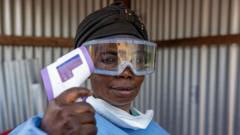
DR Congo Bans Mass Gatherings in Capital Citing Ebola Fears, Sparking Political Outcry
KINSHASA — The government of the Democratic Republic of Congo (DRC) has announced a comprehensive ban on all mass public gatherings in the capital city of Kinshasa, citing an urgent need to prevent the potential spread of the Ebola virus. Health authorities defended the directive as a vital precautionary measure to protect the capital’s estimated 15 million residents following reports of suspected cases in neighboring regions. Under the newly implemented restrictions, all large-scale political rallies, cultural events, and major sporting activities in the metropolitan area have been suspended indefinitely.
However, the decision has immediately sparked a fierce political backlash from the country's opposition coalition. Opposition leaders have accused President Félix Tshisekedi’s administration of weaponizing a public health alert to stifle democratic dissent. The ban directly preempts a highly publicized anti-government demonstration that had been scheduled to take place in the capital this weekend to protest rising inflation, economic hardship, and alleged electoral irregularities.
"This is not a genuine public health measure; it is a transparent political maneuver designed to silence the opposition and strip citizens of their constitutional right to protest," said an opposition spokesperson in a joint statement.
The DRC has a long history of battling Ebola, having recorded more than a dozen outbreaks since the virus was first discovered near the Ebola River in 1976. While these outbreaks have historically been concentrated in remote, forested regions of the eastern provinces or Equateur province, the high density of Kinshasa makes it a high-risk environment if the virus reaches the urban center.
Nevertheless, independent political analysts and civil society groups have expressed skepticism regarding the timing of the decree. They point out that previous administrations, as well as the current government during the COVID-19 pandemic, have faced similar accusations of using health emergencies to restrict political mobilization and consolidate power.
In response to the accusations, the DRC Ministry of Interior strongly denied any political motivation behind the restrictions, emphasizing that public safety must transcend partisan politics. Health officials urged the public to remain vigilant and cooperate with sanitary guidelines, warning that any failure to contain a potential outbreak in Kinshasa could have devastating humanitarian consequences. As security forces begin deploying across key areas of the capital to enforce the ban, local civic groups are calling for restraint to prevent the public health dispute from escalating into wider civil unrest.