The Sovereign Playbook: Trump, Infantino, and the Transactional Soul of Modern Football
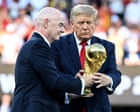
In the gilded orbit of global sports administration, where diplomacy is conducted in five-star hotel lounges and power is measured in television rights, an unexpected line of patronage has been drawn. US President Donald Trump has stepped forward as the self-appointed guardian of FIFA’s embattled president, Gianni Infantino, warning that any attempt by the football governing body to depose its leader would be a "terrible mistake." Writing with characteristic bravado on his Truth Social platform, Trump lauded the Swiss-Italian executive as "fantastic," an endorsement that arrives at a moment of acute vulnerability for Infantino. The intervention represents a striking collision of populist political theatre and high-stakes corporate sports governance, revealing how closely the instincts of the Mar-a-Lago boardroom align with the sovereign fiefdom of Zurich.
```
"FIFA would be making a 'terrible mistake' if they get rid of Gianni Infantino."
— Donald Trump
```
Infantino’s current precarity is the direct result of an ambitious, if spectacular, miscalculation. The FIFA president has found himself besieged by internal and external critics following a doomed, highly controversial plan to sell off lucrative stakes in the men’s World Cup to private equity investors. For a sport that has long balanced its hyper-commercialized reality with a mythology of working-class heritage, the proposal to securitize the game’s crown jewel was viewed by many as a step too far—a Faustian bargain that threatened to surrender the sovereignty of the global game to the whims of private capital. To his detractors, the failed venture was a symptom of Infantino’s signature hubris, an attempt to bypass traditional consensus in pursuit of an unprecedented multibillion-dollar windfall.
Yet, where football’s traditional custodians see a dangerous overreach, Trump detects a kindred spirit. The US President’s defense of Infantino is rooted in a shared philosophy of disruptive, transactional leadership that views established institutions not as monuments to be preserved, but as assets to be leveraged. By framing the pressure on Infantino as an institutional betrayal rather than a consequence of financial recklessness, Trump’s rhetoric transforms a boardroom dispute into a grand narrative of a strongman besieged by faceless bureaucrats. As the United States prepares to co-host the expanded 2026 World Cup—a tournament destined to be the most commercialized spectacle in sporting history—this public alliance serves as a potent reminder that in the modern era, the boundaries between geopolitical influence and international sport have dissolved entirely.