The Architecture of Enchantment: How Disney’s Physical Kingdom Became Its Financial Savior
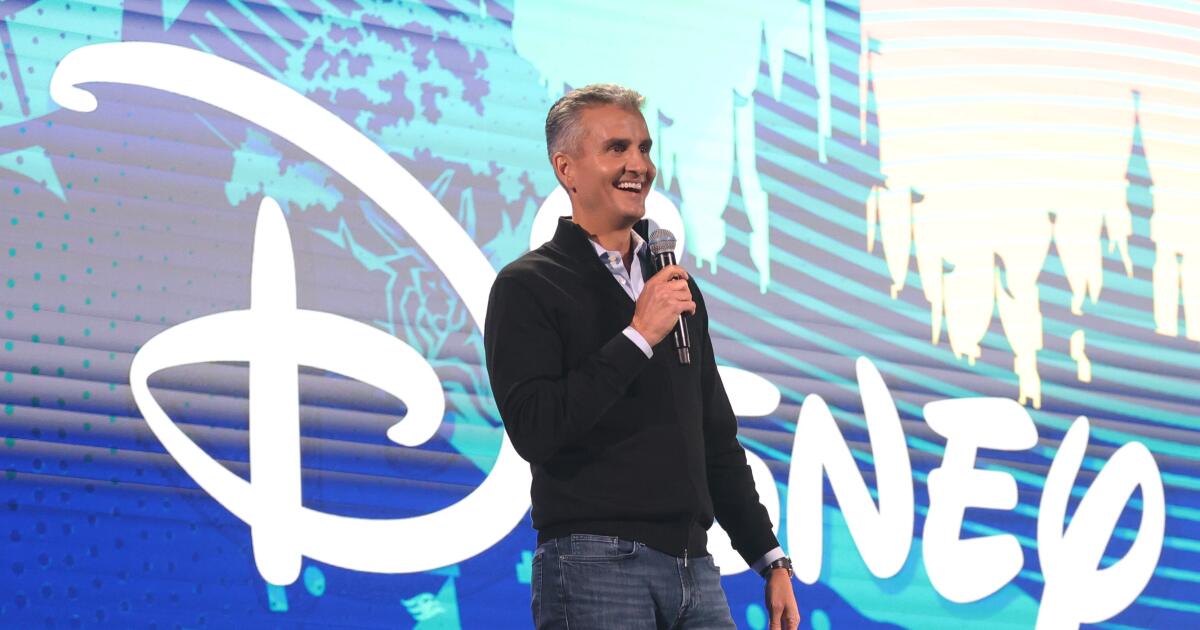
In the glittering, volatile theater of modern entertainment, where streaming wars bleed cash and traditional cinema clings to bygone eras of dominance, the house that Walt built has long sought a steady hand at the helm. Enter Josh D’Amaro. Appearing on CNBC with the immaculate, telegenic poise of an executive who understands that in the kingdom of imagination, perception is currency, the Disney chief declared a state of "clarity" and "stability" for the corporate giant. It was a performance designed to soothe nervous markets, yet beneath the polished executive parlance lay a compelling admission: the company’s physical realm—its sprawling, high-concept global theme parks—had emerged as the "big surprise" of the last quarter, acting as the buoyant, highly lucrative savior of the balance sheet.
```
"We have clarity. We have stability. And we have a strategy that is working."
— Josh D'Amaro, Disney CEO
```
D’Amaro’s blueprint for sustained expansion is not a radical departure from tradition, but rather a hyper-charged, intellectually rigorous refinement of the classic Disney flywheel. His strategy for future growth is anchored in a trinity of storytelling, intellectual property, and proprietary technology. To traverse a modern Disney park is to witness a landscape where the boundary between screen and stone has been meticulously erased. By leveraging multi-billion-dollar franchises—from the cosmic expanses of Star Wars to the cinematic mythologies of Marvel—D’Amaro is transforming passive viewership into active, premium-priced immersion. In this ecosystem, algorithm meets animatronic; the digital interface of a smartphone app is now as crucial to the guest experience as the physical architecture of the castles themselves.
There is a profound cultural irony in the reality that as our lives become increasingly digitized, Disney’s financial salvation remains anchored in the tactile world. While media analysts and Wall Street commentators fret over subscription churn and shifting digital advertising winds, the parks represent an inescapable, deeply emotional ecosystem of consumer loyalty. The "big surprise" D'Amaro notes is perhaps only surprising to those who underestimated the enduring human appetite for physical communion and collective myth-making. In a fractured culture, the theme park serves as a secular cathedral of shared memory—a place where families willingly pay premium rates to step inside the screen and participate in a curated, comforting reality.
Under D'Amaro's stewardship, this marriage of tangible experience and digital foresight aims to secure Disney’s dominance for the next generation. By positioning the parks not as legacy assets but as the primary engines of future innovation, he is redefining what a 21st-century media conglomerate must be to survive. In a landscape defined by perpetual disruption, Disney's newfound "stability" may well rest on a deceptively simple truth: that no matter how sophisticated our home screens become, the deepest magic still happens when we are invited to cross a physical threshold into another world entirely.