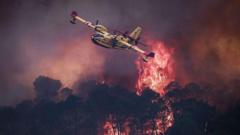
Devastating European Wildfires: Bordeaux and Madrid Battle Unprecedented Blazes
Europe is grappling with an unprecedented wave of wildfires as extreme heatwaves and prolonged droughts fuel highly destructive blazes across the continent. In southwestern France, a monstrous wildfire in the Gironde region near Bordeaux has torn through more than 162 square miles (420 square kilometers) of forest in less than four days. The sheer speed and intensity of the blaze have forced the emergency evacuation of tens of thousands of residents and holidaymakers, overwhelming local containment barriers and requiring the urgent mobilization of firefighting reinforcements from across the country.
Meanwhile, Spain is facing an equally catastrophic situation, with the Madrid region currently battling its worst wildfires on record. Parched vegetation, combined with temperatures consistently soaring past 40°C (104°F) and unpredictable gusting winds, has created a volatile environment for fire propagation. In communities surrounding the Spanish capital, emergency services have been deployed around the clock to establish defensive firebreaks and protect critical infrastructure. "The scale and speed of these fires are beyond anything we have managed in recent decades," noted a spokesperson for Madrid's emergency response services, emphasizing the severe strain on local resources.
Coordination and Containment Efforts
To combat the rapidly spreading flames, European nations are deploying a coordinated, multi-national response to support local emergency crews:
- Aerial Water Bombing: A specialized fleet of Canadair aircraft and heavy-duty helicopters has been deployed to drop thousands of gallons of water and fire retardant over the most volatile zones in France and Spain.
- Ground Reinforcements: Over 3,000 firefighters have been concentrated in the Gironde department alone, working alongside military units to secure perimeter lines.
- The EU Civil Protection Mechanism: This European alliance has been activated, allowing member states to share personnel, vehicles, and aerial support to reinforce the hardest-hit regions.
Climatologists and forestry experts warn that these devastating events are a direct symptom of accelerating global climate change. The frequency, duration, and intensity of European heatwaves have risen significantly over the last decade, drying out deep soil layers and turning vast swathes of pine forests into tinderboxes. As emergency crews continue their grueling battles on the ground, policy analysts emphasize that long-term land-management strategies and aggressive global emission reductions will be critical to preventing these catastrophic fire seasons from becoming the permanent summer norm.