The Tempest and the Octagon: Dana White Dismisses Washington’s Meteorological Conspiracy
There is a distinct brand of American theater that belongs entirely to the elements, where the atmosphere itself seems to mimic the high-stakes drama of our political landscape. Such was the stage set in Washington, D.C., on the eve of Freedom 250, a high-profile spectacle positioned under the literal and figurative shadow of 1600 Pennsylvania Avenue. As a monstrous, radar-bruising storm cell barreled toward the capital, threatening to drown the open-air grandeur of the historic event in a swamp of biblical proportions, meteorologists prepared for disaster. Then, the improbable occurred: mere miles from the venue, the tempest fractured. The storm split cleanly down the middle, skirting the perimeter of the event like a polite guest avoiding an exclusive gala, leaving the Octagon dry and the VIPs unscathed.
In the hyper-reactive laboratory of the modern internet, however, a miracle is never just a miracle; it is an executive order. Within minutes of the storm’s bizarre bifurcation, the digital panopticon was ablaze with a narrative far more seductive than simple meteorological good fortune. Online theorists, fueled by a potent mix of populist skepticism and sci-fi paranoia, declared that the federal government had deployed advanced geoengineering—cloud-seeding technology reminiscent of Cold War-era weather modification—to protect the prestige of the evening. It was a conspiracy tailor-made for our times: a belief that the deep state had mobilized to manipulate the troposphere itself, ensuring that a physical stage remained dry while the political theater continued uninterrupted.
> "If the government could control the weather, trust me, they wouldn't be using it to save my fight cards. They’d be doing a lot of other things first."
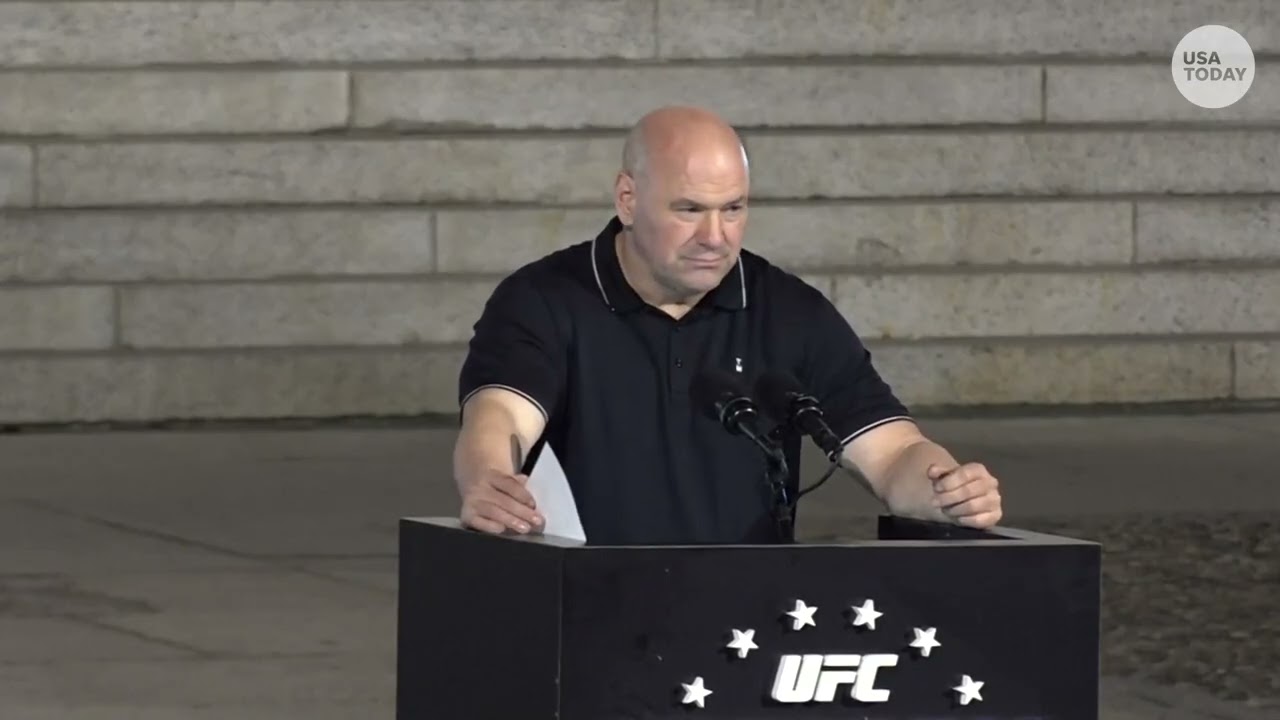
Enter Dana White. The UFC’s chief executive and ultimate high priest of unvarnished realism has spent a career navigating the chaotic intersection of public relations and raw, physical combat. He has little patience for the ethereal machinations of online shadow cabinets. Confronted with the theory that Washington’s weather-gods had intervened on his behalf, White summarily executed the rumor with his signature, blunt force pragmatism. To White, the suggestion that the Pentagon or the White House had dialed up a localized dry spell was not just absurd; it misread the entire nature of power. With a dismissive shrug that has characterized his decades at the helm of combat sports, he grounded the flight of fancy, reducing the grand narrative of techno-authoritarian weather control to nothing more than sheer luck and atmospheric happenstance.
Ultimately, the furor surrounding the spared skies of Freedom 250 reveals a deeper cultural anxiety. We live in an era so saturated by spectacle and distrust that the natural world is no longer granted its sovereignty; even the rain is suspected of having an agenda. By swatting down the conspiracy, White did more than settle a logistical rumor; he acted as a brief, grounding wire in a culture short-circuiting on its own paranoia. In the end, the storm passed, the fights went on, and the public was left with a reminder that sometimes the sky is just the sky, and the only carefully orchestrated violence in Washington is the kind that takes place inside the cage.