The Sublime Bureaucracy of the Martian Climb
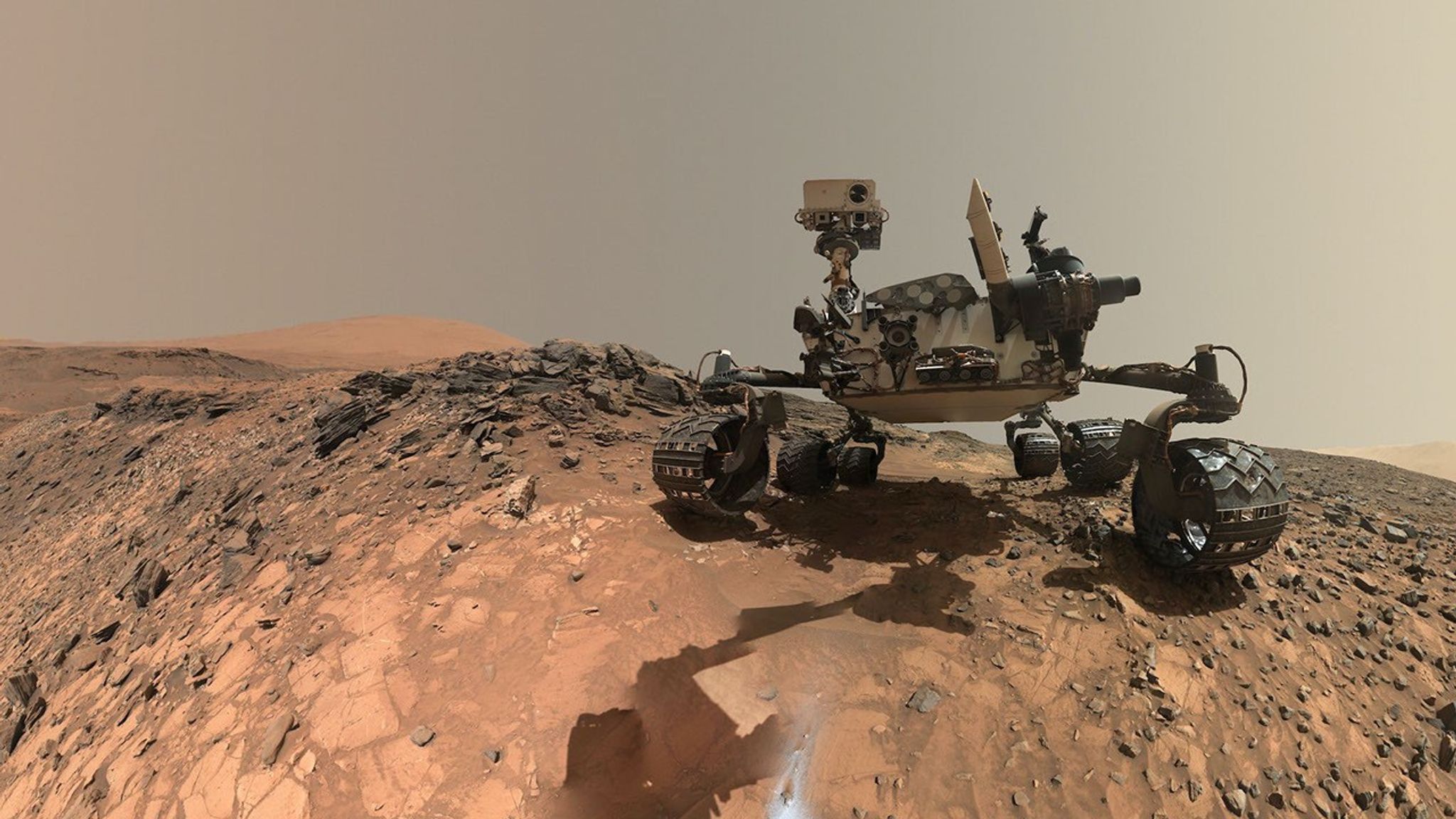
There is a quiet, almost meditative rhythm to humanity’s longest-running performance on the red desert stage. In the middle of August 2026, as Earth-bound observers navigated the dog days of summer, the Curiosity rover quietly crossed into Sols 4982–4987 of its tenure on Mars. This week, according to planners at Malin Space Science Systems, marked a transition back to what mission operations specialist Allison Dries-Padilla dryly termed “regularly scheduled programming.” The phrase, borrowed from the terrestrial lexicon of television interruptions, carries a marvelous irony. On Mars, the routine is itself a miracle: a one-ton, nuclear-powered laboratory climbing the steep, wind-scoured flank of Aeolis Mons—Mount Sharp—one agonizingly deliberate revolution of its scarred aluminum wheels at a time.
```
"In the vocabulary of planetary exploration, a detour is rarely a distraction; it is an invitation to read a page of history that was never meant to be opened."
```
The brief departure from this scheduled programming was prompted by an "erosional surface"—a geological curiosity that demanded a pause in the rover’s ascent. In the field of planetary science, such features are the physical archives of deep time, scars left by ancient winds or long-evaporated waters that expose the underlying stratigraphy. To pass them by without investigation would be an affront to the curatorial spirit of the mission. For several sols, Curiosity lingered, deploying its robotic arm to taste, zap, and photograph the terrain. But the siren song of Mount Sharp's higher elevations remains absolute. Having extracted what secrets the erosional surface was willing to yield, the rover has once again pivoted its chassis toward the peak, resuming its slow-motion pilgrimage through the Martian epochs.
This transition highlights a fascinating psychological reality of modern space exploration: the domesticating of the cosmic frontier. To refer to the navigation of an ancient, alien lakebed as a "regularly scheduled" endeavor is to reveal how thoroughly we have integrated the sublime into our daily administrative workflows. The engineers and scientists at Malin Space Science Systems and the Jet Propulsion Laboratory do not operate in a state of perpetual, breathless awe; instead, they manage the infinite void with the precise, methodical focus of railway dispatchers. It is a triumph of human telemetry over cosmic indifference, where the grandest geological mystery in the solar system is partitioned into manageable, weekly shift schedules.
Yet, as Curiosity leaves the detour behind and restarts its climb, the stakes of this mundane routine remain unimaginably high. Every meter of elevation gained is a step forward through Martian history, tracing the profound transition of this world from a wet, potentially habitable oasis into the frozen, hyper-arid desert of the present day. The rover is climbing through the very chapters of planetary death. As the machine grinds forward into its five-thousandth sol and beyond, its journey reminds us that the line between routine operations and historic discovery is razor-thin—and that sometimes, the most revolutionary act is simply sticking to the path.