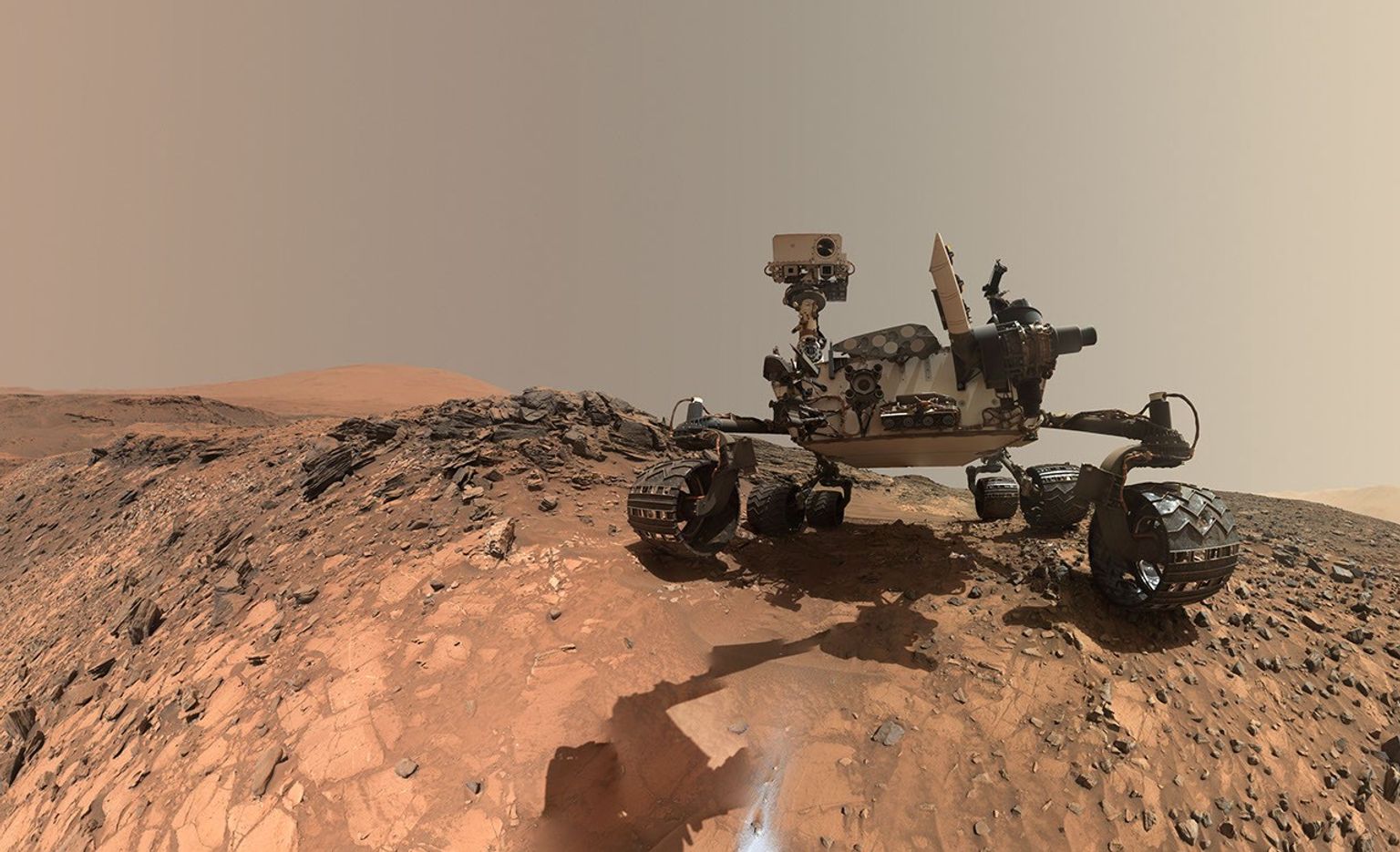
The Fourteen-Year Solitude: Curiosity’s Stoic Endurance on the Martian Frontier
As Sols 4975–4981 roll across Gale Crater, scientists reflect on a decade and a half of remote exploration, mechanical grit, and the quiet revolution of planetary mineralogy.
***
In the hyper-arid quietude of Gale Crater, time is measured not by the turning of autumn leaves or the swell of tides, but by the steady, mechanical grinding of aluminum wheels against ancient mudstone. This August, as Earth planning calendars marked Friday, August 7, 2026, the Curiosity rover quietly crossed into its fourteenth Earth year on the Martian surface—a milestone charted by the dizzying stretch of Sols 4975 through 4981. For the planetary scientists, mineralogists, and engineers who guide this nuclear-powered explorer from offices scattered across a blue world millions of miles away, the anniversary is both a triumph of terrestrial genius and a poignant testament to human persistence. What began as a high-stakes, multi-billion-dollar gamble in the summer of 2012 has matured into one of modern science’s most reliable, elegant, and quietly revolutionary memoirs of deep-space exploration.
To look back at the genesis of this mission is to recall a collective, visceral terror. Writing from the vantage of this fourteen-year milestone, Susanne P. Schwenzer, Professor of Planetary Mineralogy at The Open University and a long-time member of the mission's science team, remembered the breathless anxiety of watching the landing phase unfold via NASA’s "Eyes on the Solar System" visualization. The "seven minutes of terror"—wherein a rocket-powered sky crane lowered a one-ton laboratory onto an alien plain—felt less like a scientific deployment and more like a theatrical act of faith. In the decade and a half since that successful touchdown, the white-knuckle adrenaline of the landing has dissolved into a rich, meditative rhythm of daily curation. Over nearly five thousand Martian sols, the anxiety of survival has yielded to the poetry of routine: analyzing the chemical whispers of Mount Sharp, diagnosing the slow wear on the rover’s chassis, and slowly decoding the watery biography of Mars.
> "The anxiety of survival has yielded to the poetry of routine: analyzing the chemical whispers of Mount Sharp and decoding the watery biography of Mars."
Ultimately, Curiosity’s historic longevity represents something far deeper than mere mechanical durability; it has fundamentally recalibrated our relationship with the cosmos. By systematically cataloging the mineralogical transitions of Gale Crater, the rover has transformed Mars from a cold, dead abstraction into a nuanced landscape of ancient habitable environments, historic warm spells, and persistent lake systems. Each drill hole bored into the clay-rich soil is an act of deep-time archaeology, writing a detailed history of a planet that might have once mirrored our own. As Curiosity continues its slow, defiant climb up the sulfate-rich slopes of Mount Sharp, its weathered frame dusted in the fine red rust of its adopted home, the team on Earth remains tethered to its gaze—acutely aware that our robotic emissaries do not merely collect data; they carry our insatiable, existential curiosity into the dark.