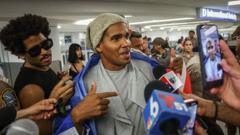
Prominent Cuban Dissident Luis Manuel Otero Alcántara Arrives in US Exile
Prominent Cuban dissident and independent artist Luis Manuel Otero Alcántara has arrived in the United States, transitioning into exile after spending nearly three years of a five-year sentence in a maximum-security prison. Otero Alcántara was arrested on July 11, 2021, during the historic, island-wide anti-government protests—the largest demonstrations Cuba had seen since the 1959 revolution. His release and subsequent exile highlight the Havana government's ongoing strategy of using forced migration to neutralize high-profile internal opposition.
As a co-founder of the San Isidro Movement (MSI), Otero Alcántara became one of the most visible faces of Cuba's contemporary civil society. The collective of artists, journalists, and academics gained international attention in late 2020 by staging hunger strikes and public performances protesting Decree 349, a controversial law requiring government censorship and approval of all artistic activity. Otero Alcántara’s provocative performance art, which frequently featured the Cuban flag, drew the ire of state authorities, leading to dozens of temporary detentions before his eventual long-term imprisonment.
In June 2022, a Cuban court sentenced him to five years in prison on charges of public disorder, contempt, and insulting national symbols. Human rights organizations, including Amnesty International—which designated him a prisoner of conscience—repeatedly condemned his detention as a politically motivated attempt to silence dissent. During his incarceration at the Guanajay maximum-security prison, Otero Alcántara reportedly undertook multiple hunger strikes to protest his confinement and the denial of medical care, drawing continued international pressure on the Cuban administration.
His departure to the United States reflects a well-documented historical pattern where the Cuban government offers imprisoned activists a stark choice: remain behind bars or accept permanent exile. While his arrival in the U.S. offers relief to his supporters, international analysts note that the forced exile of top opposition figures has severely fractured the leadership of Cuba's internal pro-democracy movement, leaving a political void on the island even as severe economic crises and inflation continue to fuel domestic discontent.