The Sisyphean Suit: How ‘Coyote vs. Acme’ Unpacks the Absurdity of the Corporate Machine
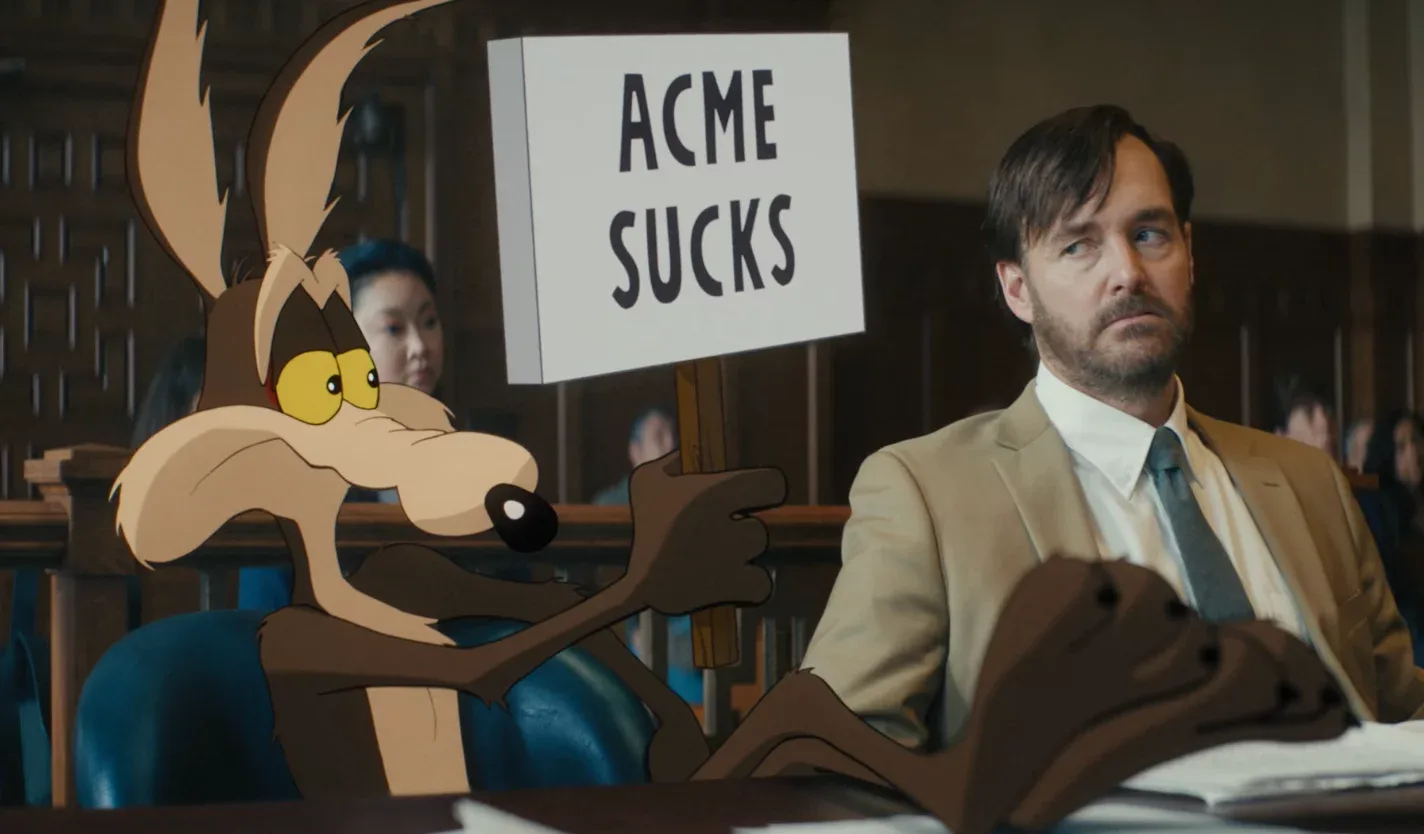
In an era where the machinery of Hollywood often feels as volatile and inexplicable as a malfunctioning giant magnet, Coyote vs. Acme arrives not merely as a film, but as a brilliant, meta-textual act of creative defiance. The premise is delightfully absurd yet grounded in a classical legal-thriller structure: Wile E. Coyote, battered by decades of explosive failure, finally retains a down-on-his-luck human lawyer to sue the Acme Corporation for product liability. It is a narrative masterstroke that translates the wordless, Sisyphean agony of Chuck Jones’s desert-bound predator into a sharp-witted courtroom drama. The irony, of course, is deliciously sharp; a film about a resilient underdog taking on an unfeeling, monolithic conglomerate became the real-world casualty of the exact same corporate spreadsheet math, shelved by executives who preferred a tax write-off to a theatrical triumph.
Yet, to view the film solely through the lens of its behind-the-scenes martyrdom is to undersell its sheer, kinetic brilliance. The film miraculously sails through a notoriously difficult tonal passage, marrying the frantic, slapstick gravity of classic Looney Tunes animation with a warm, retro-tinged live-action aesthetic. As Wile E.’s legal team takes on Acme's slick, high-powered defense counsel, the movie operates on two distinct frequencies: a nostalgic, analog warmth that smells of dust and mimeograph paper, and a razor-sharp corporate satire that targets modern industrial absurdity. The animators treat the Coyote not as a mere digital asset, but as a silent-screen tragedian, his expressive yellow eyes conveying a lifetime of singed fur and misplaced optimism that feels remarkably human alongside his live-action counterparts.
> "The animators treat the Coyote not as a mere digital asset, but as a silent-screen tragedian, his expressive yellow eyes conveying a lifetime of singed fur and misplaced optimism."
Ultimately, Coyote vs. Acme succeeds because it understands that the cartoon logic of the mid-twentieth century is the perfect prism for viewing the hyper-capitalism of the twenty-first. Wile E.’s pursuit of the Road Runner was never just about hunger; it was about the absurd belief that the next purchase, the next shiny gadget from the Acme catalog, would finally deliver salvation. By transforming this existential loop into a class-action struggle, the film delivers a rare feat: a legacy-IP property that manages to be genuinely subversive. It reminds us that behind the slick branding and the impenetrable legal shielding of our modern monopolies, there is a fundamental human messiness—and occasionally, a coyote with a lawsuit—refusing to be erased by the bottom line.