The Cosmos, Unbound: How Community College Pioneers Are Rewriting the Stellar Script
In a quiet pedagogical revolution, educators are discarding the static textbooks of yesteryear to bridge the gap between NASA’s bleeding-edge discoveries and the democratic frontlines of higher education.
***
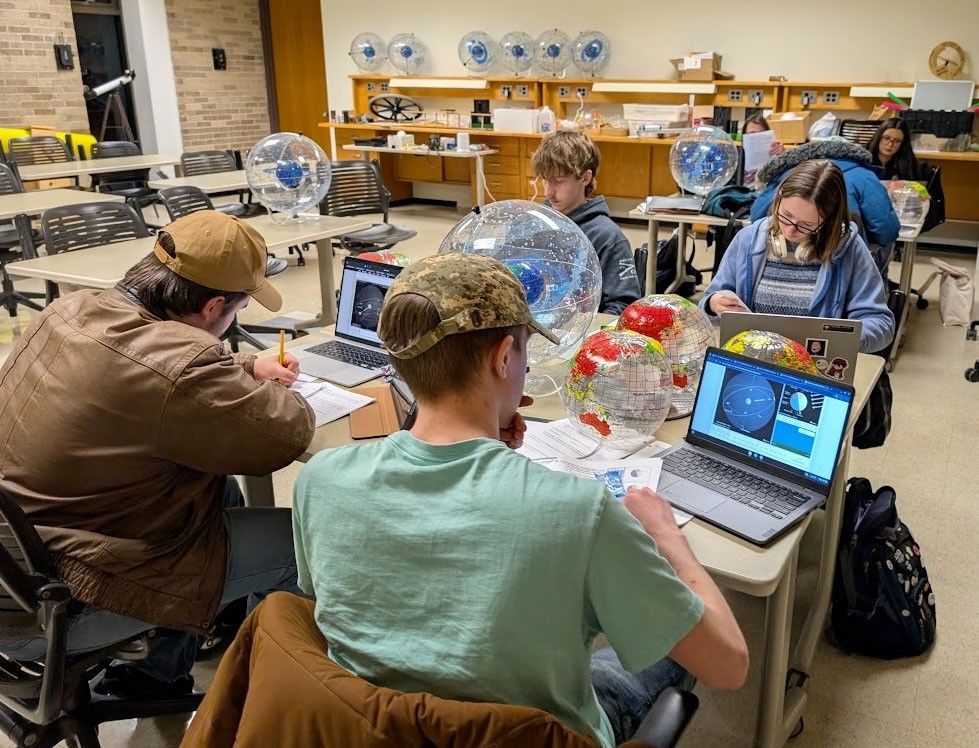
For decades, the study of introductory astronomy has suffered from a curious paradox: the presentation of an expanding, violent, and utterly breathtaking universe has remained trapped within the suffocating confines of the static, two-dimensional textbook. These heavy, expensive volumes, with their faded diagrams of Keplerian orbits and dense tables of stellar classification, belong to a bygone Gutenberg era. They systematically fail to speak to a generation of students whose cognitive habits have been forged in the crucible of interactive, high-definition digital media. At the democratic frontlines of higher education—the community colleges, which educate a vast and diverse cross-section of the undergraduate population—this pedagogical inertia is finally being shattered. A cohort of visionary instructors, recognizing that a passive reading of the cosmos is an affront to its majesty, has embarked on an ambitious effort to drag the astronomy curriculum into the twenty-first century.
The catalyst for this paradigm shift is a sophisticated collaboration with NASA. Three distinct project teams from the space agency have partnered with community college educators to dismantle the traditional textbook model, replacing it with a dynamic, active-learning ecosystem powered by NASA's unparalleled repository of real-time data, exquisite astrophotography, and interactive modeling tools. Students are no longer merely memorizing the lifecycle of a star from a sterile paragraph; instead, they are actively manipulating raw data from the James Webb Space Telescope, mapping exoplanetary transits, and navigating the dust-choked pillars of creation using the same diagnostic tools employed by research astrophysicists. This is science taught not as a catechism of established facts, but as a living, breathing detective story.
> "To teach astronomy without the active, technicolor reality of NASA’s modern missions is to teach art history through black-and-white photocopies."
This pedagogical evolution is particularly critical given the unique demographic of the community college student body. For many of these undergraduates—frequently first-generation scholars, working parents, and non-traditional students—an introductory astronomy class is not just a general education requirement; it is their primary, and perhaps only, exposure to the physical sciences. By replacing passive rote learning with inquiry-based exploration, the new curriculum fosters a robust scientific literacy and a sense of personal agency. It democratizes the cosmos, transforming students from mere spectators of scientific triumph into active participants in the human endeavor to decode the night sky.
Ultimately, this initiative transcends the boundaries of the classroom, hinting at a broader cultural necessity in how we disseminate complex scientific knowledge. In an era increasingly marked by skepticism toward scientific authority, the remedy is not to demand blind trust, but to invite radical transparency and hands-on participation. By dismantling the dusty, authoritative monologues of traditional textbooks and replacing them with the collaborative, evidence-based inquiry of modern astrophysics, these community college instructors are doing more than just updating a syllabus. They are cultivating a vital intellectual humility, proving that while the universe may be infinite, the tools to comprehend it should be within everyone's reach.