Christopher Nolan’s ‘Odyssey’ Has a Circe Problem
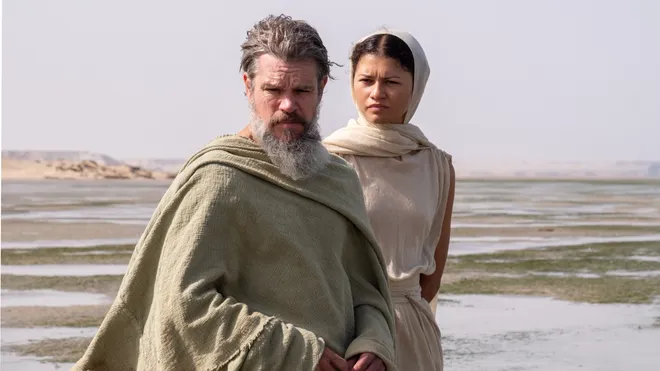
Christopher Nolan’s highly anticipated cinematic adaptation of Homer’s epic, The Odyssey, has captivated audiences worldwide with its signature grand scale and narrative ambition. However, amidst the praise for its technical mastery, a growing chorus of classicists and film critics is taking issue with how the blockbuster handles one of ancient literature's most enigmatic figures: the goddess Circe. In Nolan's retelling, the complex divinity of Aeaea is reportedly reduced to a conventional, antagonistic witch, sparking a broader debate over the director’s historical approach to female characterization.
In Homer’s original epic, Circe is far more than a simple obstacle for Odysseus to overcome. She is a powerful, independent deity—the daughter of the sun god Helios—who possesses vast knowledge of herbology, fate, and the underworld. While she initially transforms Odysseus's crew into swine, she eventually becomes a crucial ally, host, and advisor, guiding the Greek hero on how to safely navigate the perils of Scylla, Charybdis, and the Sirens. By stripping Circe of her duality and her transition from threat to mentor, critics argue the film misses the core of her mythological significance, transforming her from a complex archetype of female autonomy into a standard Hollywood villain.
This critique is not entirely new for Nolan, whose acclaimed filmography—ranging from Inception and Interstellar to Oppenheimer—has frequently faced scrutiny for its depiction of women. Critics have long argued that while Nolan excels at constructing intricate, non-linear puzzles and awe-inspiring practical set pieces, his female characters often serve primarily as plot devices or tragic catalysts for the male protagonist's emotional journey. In The Odyssey, this pattern appears to repeat; Circe’s mystical island serves as a stunning visual playground for Nolan's temporal distortions, but the character herself is denied the internal depth granted to Odysseus.
Ultimately, while the film is poised to dominate the box office and awards season with its groundbreaking cinematography and visceral scale, the "Circe problem" highlights a persistent creative compromise. By choosing cinematic streamlining over mythological nuance, the adaptation delivers a thrilling action-adventure but leaves one of literature’s earliest and most fascinating women stranded in the shallow waters of conventional archetypes.