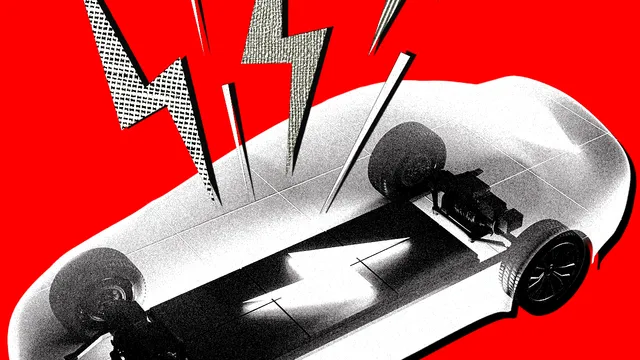
The Ghost in the Green Machine: China’s Electric Dream Confronts the Reality of Rust
As millions of early-generation electric vehicles reach their twilight years, the vanguard of the global green transition faces a reckoning of scale, chemistry, and forgotten waste.
To walk the neon-lit boulevards of Shenzhen or Shanghai is to witness a silent revolution—literally. The quiet, high-torque hum of lithium-ion engines has largely replaced the petrol-choked rattle of the twentieth century, presenting a sleek, frictionless vision of ecological redemption. Driven by aggressive state subsidies and a consumer class that treats the electric vehicle (EV) not merely as transport, but as the ultimate digital lifestyle accessory, China has successfully positioned itself as the undisputed architect of the post-fossil-fuel age. Yet, beneath this shimmering veneer of climate-conscious modernity lies a silent, accumulating weight. The first grand wave of early-adoptive EVs, purchased during the initial state-backed boom of the mid-2010s, is now quietly reaching its expiration date. The shiny promise of yesterday’s green future is fast becoming the stubborn, toxic refuse of today.
The heart of the dilemma lies in the heavy, chemically volatile bricks of spent lithium-iron-phosphate and nickel-cobalt-manganese nestled within these aging chassis. While Beijing’s industrial apparatus proved peerless at scaling the production of these high-tech powerhouses, the domestic waste management sector has been remarkably slow to construct the circular infrastructure required to dismantle them. Recycling consortia and municipal waste operators find themselves marooned in a regulatory and technological purgatory, currently ill-equipped to handle the sheer volume of spent cells now flooding the secondary market. It is a classic modern paradox: a society that has perfected the art of the futuristic upgrade, but neglected the unglamorous, low-margin necessity of cleaning up after itself.
> "True sustainability is not measured by the speed of the showroom floor, but by the quiet, meticulous elegance of the scrap heap."
Consequently, a chaotic grey market has emerged to fill the vacuum. Unregulated back-alley workshops now compete with state-sanctioned recyclers, violently stripping down high-voltage battery packs with little regard for toxic runoff, soil contamination, or worker safety. For the affluent urbanites who embraced the EV as a statement of conscientious lifestyle and forward-thinking luxury, the realization that their clean-energy dreams may terminate in a poisoned field is a sobering disillusionment. If the state cannot harmonize its aggressive manufacturing quotas with a sophisticated, closed-loop recycling ecosystem, the green miracle risks looking less like a savior of the biosphere and more like a high-tech shell game.