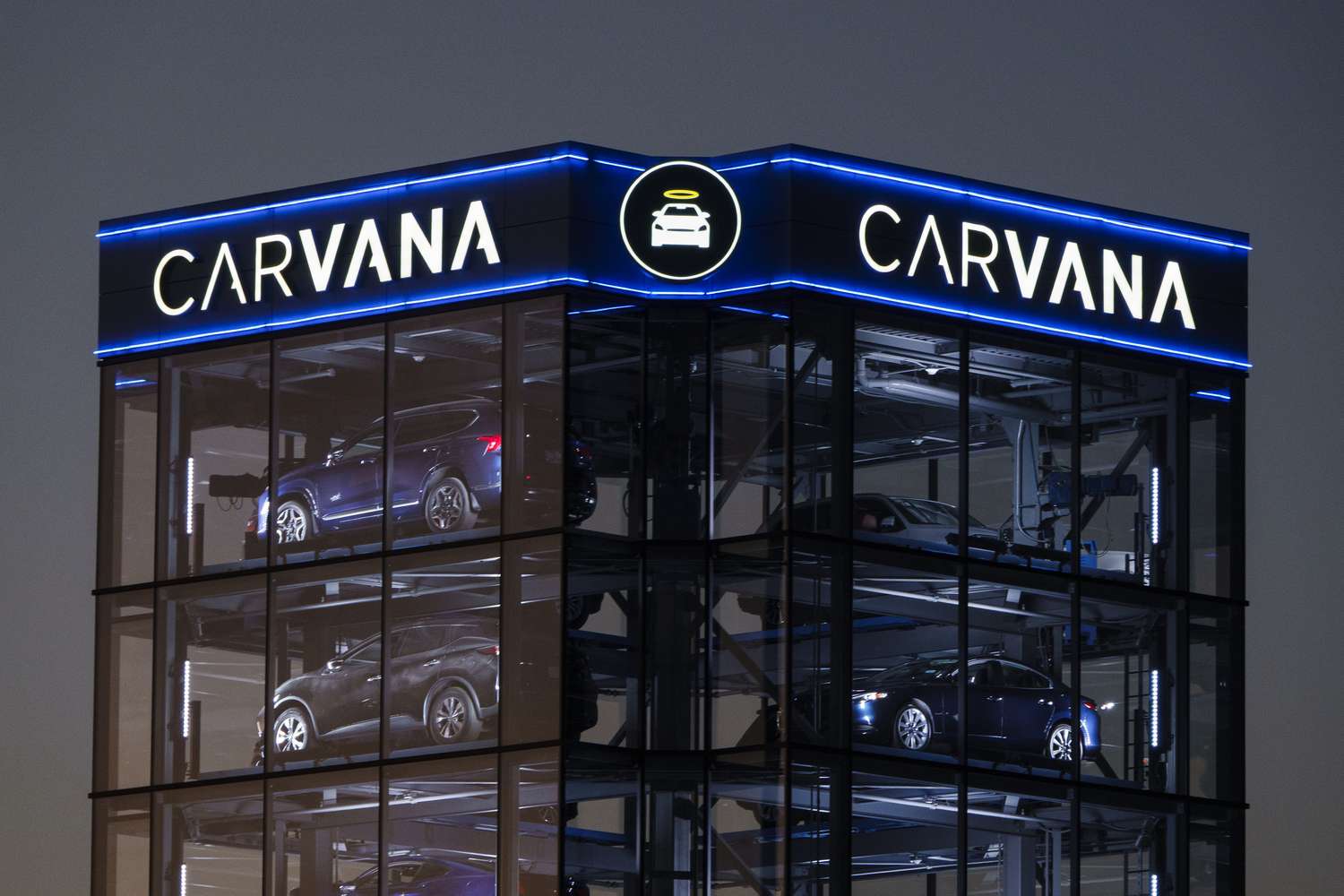
The Gravity of Tomorrow: Why Carvana’s Record Present Couldn’t Save It From Wall Street’s Future
There is a distinct, almost theatrical irony in the modern theater of high finance: sometimes, performing miracles is simply not enough. Carvana, the online automotive retailer that became the poster child of both pandemic-era retail exuberance and a subsequent, agonizing near-death experience, presented its second-quarter earnings on Wednesday as a triumphant monument to survival. The company posted record-breaking quarterly results, proof of a remarkable operational turnaround that rescued its towering glass car-vending machines from the precipice of bankruptcy. Yet, almost instantly, the celebratory mood evaporated. The company’s stock stumbled, caught in the undertow of a market that cares far less about today’s hard-won victories than the precise, mathematical promises of tomorrow.
The catalyst for the descent was a classic Wall Street paradox. Even as Carvana demonstrated its current profitability, its forward-looking guidance—specifically a projected earnings target of between $2.7 billion and $3 billion pointing toward its 2026 trajectory—failed to scale the dizzying heights envisioned by analysts. For a company that has spent the last eighteen months executing a grueling, self-styled odyssey of debt restructuring and cost-cutting, the lukewarm reception was a stark reminder of the market’s insatiable appetite. In the eyes of investors, Carvana is no longer a precarious survivor deserving of a sympathy premium; it has been reclassified as a mature competitor, subject to the cold, unforgiving arithmetic of long-term scaling in a high-interest-rate environment.
```
Carvana's Q2 Paradox:
┌──────────────────────────────┐
│ Record Q2 Performance │ ──► The Present: Triumph
└──────────────────────────────┘
│
▼
┌──────────────────────────────┐
│ 2026 Guidance: $2.7B - $3B │ ──► The Future: Missed Expectations
└──────────────────────────────┘
```
This tension highlights a deeper cultural shift in how we value the disruptors of the digital age. Under the stewardship of Chief Executive Ernie Garcia III, Carvana succeeded in transforming the deeply friction-filled, analog chore of buying a used sedan into a seamless, algorithmically optimized transaction. But the very frictionless nature of its business model makes its valuation notoriously volatile. When the cost of capital was negligible, Carvana’s vision of a frictionless future was priced like a tech monopoly; today, with inflation-weary consumers pulling back on major purchases and auto-loan delinquencies ticking upward, Wall Street is demanding absolute perfection. The projected $2.7 billion to $3 billion profit range is objectively robust, yet it represents a horizon where growth is merely steady, rather than exponential.
Ultimately, the market’s reaction reveals the fragile architecture of corporate narratives. Carvana has proved that it can sell cars efficiently, manage its inventory with surgical precision, and generate real cash flow—milestones that its loudest critics once declared impossible. However, in escaping the gravitational pull of its past failures, the company has entered a new orbit where it must contend with the exhausting reality of normalized expectations. For Carvana, the challenge is no longer surviving the storm, but convincing an increasingly skeptical audience that its quiet, profitable journey forward is just as thrilling as the wild ride that brought it here.