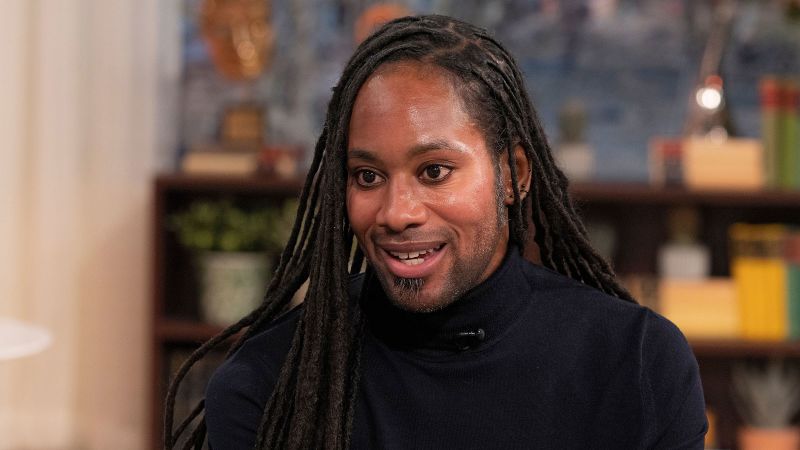
A Quiet End to a Public Crucible: The Tragic Fall of Jason Arday
There is a peculiar, devastating velocity to the way modern institutions first canonize their heroes and then dissect them. For a brief, shining moment, Dr. Jason Arday was the undisputed avatar of academic transcendence. His trajectory—from a childhood marked by silent developmental delays to his appointment as the youngest Black professor in the history of the University of Cambridge—was the kind of triumph-of-the-will narrative that elite universities, desperate to project progressiveness, consume like oxygen. Yet, that narrative has reached a sudden, dark endpoint. Cambridge Vice-Chancellor Deborah Prentice confirmed that Arday, who had recently resigned in the shadow of a career-ending plagiarism scandal, has died.
The descent was as swift as his ascent. Only months prior to his death, Arday was enveloped in a clinical, relentless reckoning over the integrity of his scholarship. What began as whispers in the cloistered corridors of academic watchdogs quickly metastasized into formal accusations of systemic plagiarism and intellectual duplication. In the high-stakes theater of global academia, where peer review is both shield and sword, the revelations dismantled his carefully constructed authority. To his defenders, the scrutiny felt like a targeted, punitive reaction to an outsider who dared ascend too high; to his critics, it was a necessary excision of academic fraud. In either light, the scandal exposed the fragile scaffolding of an industry that demands its stars be not only brilliant but flawlessly marketable, transforming a human being into a symbolic battleground.
> "Jason Arday’s legacy is now inextricably bound to the very systems of prestige and pressure he spent his life trying to navigate."
In her statement, Vice-Chancellor Prentice spoke of a community in shock, noting Arday's "extraordinary warmth" and the profound loss felt across the university's historic campus. But beneath the polite protocols of institutional mourning lies a deeper, more unsettling discomfort. Arday’s death, occurring in the immediate wake of his public fall from grace, casts a harsh, interrogative glare on the brutal ecosystem of contemporary intellectual life. The modern university is no longer just a sanctuary for contemplation; it is a hyper-competitive pressure cooker where the distance between canonization and cancellation is razor-thin, and where the human cost of academic ruin is rarely factored into the ledger of accountability.
Ultimately, Jason Arday’s story will be remembered not merely as a cautionary tale of intellectual malpractice, nor simply as a tragedy of personal despair, but as a complex, haunting collision of both. He was a man who lived his life in defiance of limits, only to find himself trapped in a system that defines its subjects by their most vulnerable moments. As the halls of Cambridge fall silent in his wake, the tragedy leaves behind a sobering truth: that in the relentless pursuit of academic perfection and institutional branding, we often forget the fragile humanity of the scholars we place upon the pedestal.