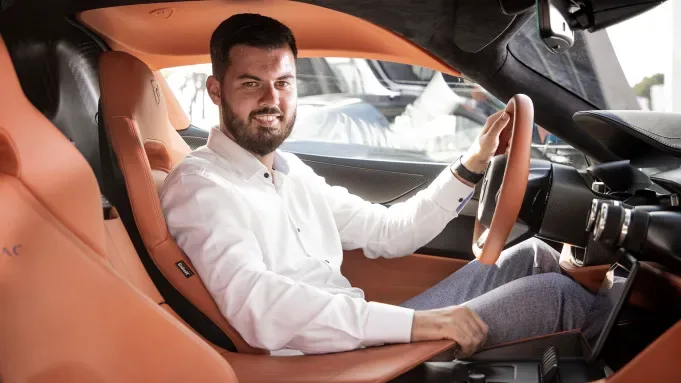
The Symphony of the Pistons: Why Bugatti’s EV Pioneer is Fighting to Keep the Engine Alive
It is a delicious, high-octane paradox that the man who engineered the world’s most formidable electric hypercar has positioned himself as the ultimate defender of the internal combustion engine. Mate Rimac, the wunderkind CEO of Bugatti Rimac, has made it clear that the future of the ultra-luxury supercar is not silent, but roaring. Speaking to CNBC, Rimac dismissed the notion that the absolute pinnacle of automotive engineering must inevitably capitulate to the sterile, whisper-quiet hegemony of the electric vehicle. For the ultra-wealthy, he suggests, luxury is increasingly defined not by technological conformity, but by the magnificent, endangered theater of controlled explosions.
This stance is more than mere nostalgia; it is a shrewd reading of a market where scarcity dictates value. As the mass automotive market pivots toward utilitarian electrification, the analog mechanics of a multi-million-dollar combustion engine are transformed from anachronisms into high art. Rimac understands that a Bugatti is not a tool for transportation; it is a kinetic sculpture, a mechanical timepiece operating in an era of smartwatches. The tactile shudder of a V16, the operatic swell of mechanical compression, and the scent of high-octane gasoline constitute a sensory liturgy that electrons simply cannot replicate. In Rimac’s vision, high-end sports cars will retain their cylinders "for a very long time" precisely because they are unnecessary—a magnificent, bespoke defiance of the prevailing regulatory wind.
Yet, Rimac’s defense of the piston is not a Luddite’s retreat. As the architect of Bugatti’s latest hybrid masterpiece, the Tourbillon—which pairs a massive, naturally aspirated V16 engine with three electric motors—he is charting a middle path of decadent compromise. This hybrid synthesis allows the brand to bypass urban emissions zones while preserving the visceral soul of the machine on the open road. By blending his own pioneering battery expertise with the legacy of classical mechanics, Rimac is ensuring that the global elite can continue to indulge in the theater of horsepower without the guilt of obsolescence. It is a masterstroke of luxury positioning: selling the past with the technology of the future, packaged as an eternal asset class.
Ultimately, Rimac’s declaration underscores a wider cultural reality: at the highest echelons of consumption, progress is rarely linear. While the democratization of the electric vehicle continues its relentless march across the suburban landscape, the rarefied heights of the hypercar market will remain a sanctuary for the archaic. By guaranteeing the survival of the combustion engine, Rimac is not merely selling cars; he is preserving a dying sensory epoch. In a world increasingly digitized and sanitized, the roar of a Bugatti engine remains a fierce, expensive proof of life—a reminder that some luxuries are too thrilling to ever be surrendered to silence.