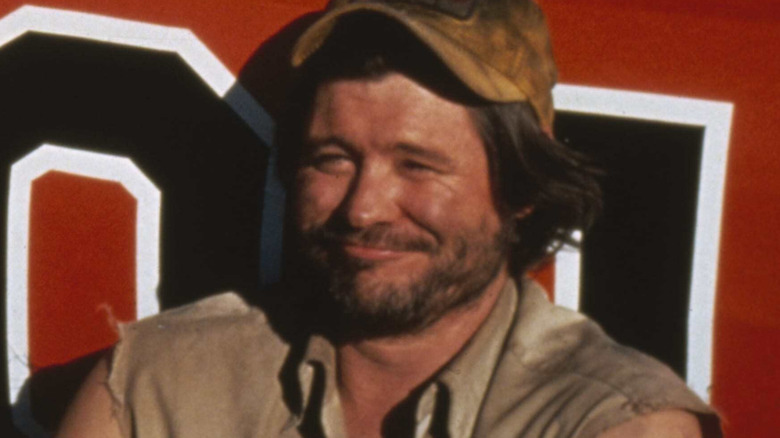
The Mechanic of the Southern Myth: Ben Jones, 'Dukes of Hazzard' Star and Politician, Dies at 84
In the grand, sun-bleached tapestry of late-twentieth-century American television, Cooter Davenport was a secular saint of the blue-collar South. As the perpetually grease-stained, pathologically loyal mechanic of The Dukes of Hazzard, he was the quiet engine room of the show’s high-octane fantasy, the man who kept the General Lee flying when gravity and the local sheriff demanded otherwise. Ben Jones, the actor, activist, and politician who inhabited Cooter with an earthy, unforced authenticity, has died at the age of 84. His passing, confirmed on Sunday by his wife of over thirty years, Alma Viator, marks the quiet closing of a loud, dusty, and singularly American chapter of cultural iconography.
To understand Jones is to understand the dizzying, sometimes contradictory dualities of the modern South. He was a man who effortlessly bridged the chasm between Hollywood’s cartoonish populist folklore and the sharp realities of federal governance. In 1988, Jones accomplished a feat that defied the conventional gravity of show business, trading the fictional backroads of Hazzard County for the marble corridors of Washington, D.C., where he served two terms as a Democratic U.S. Representative from Georgia. On Capitol Hill, he was not a novelty act but a sharp-witted legislator, navigating the shifting tectonic plates of Southern politics with the same folksy pragmatism that defined his screen persona.
```
"He understood the marrow of the Southern electorate—their grievances, their humor, their fierce localism."
```
Yet, it was his post-political life that perhaps best illustrated the friction between nostalgia and modern cultural reckoning. In his later years, Jones became the chief curator of his own mythos, establishing "Cooter’s Place"—a chain of museums-cum-gift-shops—and fiercely defending the legacy of The Dukes of Hazzard against contemporary re-evaluations. When the show's signature Dodge Charger, adorned with the Confederate battle flag, became a flashpoint in the nation’s culture wars, Jones stood his ground with stubborn, evocative conviction. To him, the flag on the General Lee’s roof was not a symbol of oppression, but a benign emblem of a rebel spirit, rural honor, and harmless anti-authoritarianism. It was a defense that placed him at the center of a profound American argument, showcasing his refusal to let the complex realities of history overwrite the warm, cinematic memories of his youth.
With Jones’s death, the engine of that mythic, orange Dodge Charger grows a little quieter. He leaves behind a legacy that cannot be easily categorized—part populist theater, part earnest legislative service, and entirely Southern. In a culture increasingly divided by sterile abstractions, Jones remained stubbornly tactile, a man who believed in the power of greasy hands, local loyalty, and the enduring allure of a well-timed jump over a creek bed. He is survived by his wife, Alma, and a country still trying to reconcile the idealized dirt roads of its past with the paved highways of its future.